
The limited availability of referral resources—such as ambulances from the village to the community health center—worsens women’s access to health care because they have to take turns using them. “There’s only one ambulance here from the community health center. When we need an ambulance, we usually can’t get one because someone else is using it at the same time,” Igen emphasized.
Currently, through a community-based referral system that connects families, community health workers, village governments, and health care providers, women are able to access reproductive health services and receive assistance earlier when they experience pregnancy-related emergencies.
The Beginnings of the Referral System’s Development
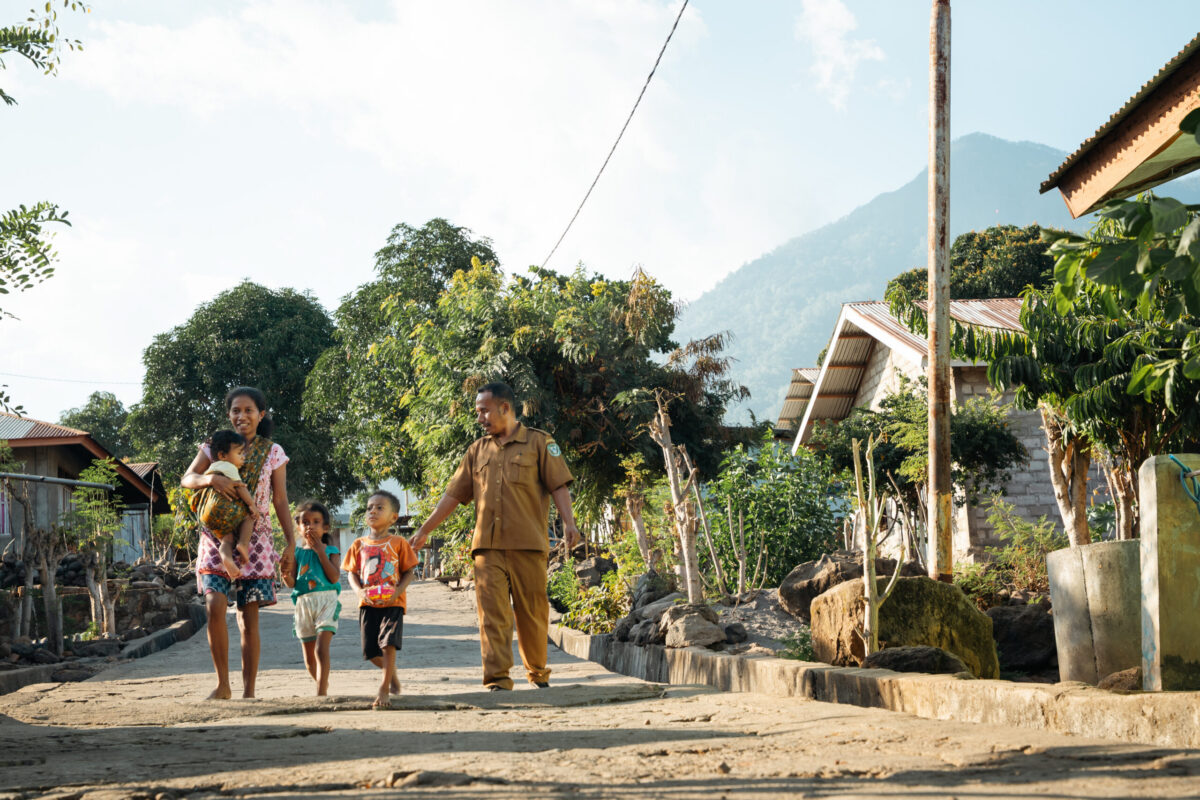
Maria Yana Aryani Bate, one of the village health workers, worked with residents to design a communication-based contraceptive referral process. In this system, the volunteer acts as a liaison between residents and health workers. Residents who wish to use contraception simply contact the volunteer, and a health worker will then visit their home to provide services without requiring them to go to the community health center.
“Our job as outreach workers is to reach out to those who want to use contraception,” he explained.
Meanwhile, Igen, together with the community, has specifically created a referral system for pregnant women called the “Kartu Pintar Ibu Hamil” (Smart Card for Pregnant Women). This card contains a list of important contacts, ranging from the husband and community health workers to public health center staff. By using this card, anyone who encounters a pregnant woman can communicate with these individuals and take swift action when the woman needs services or is facing a medical emergency.
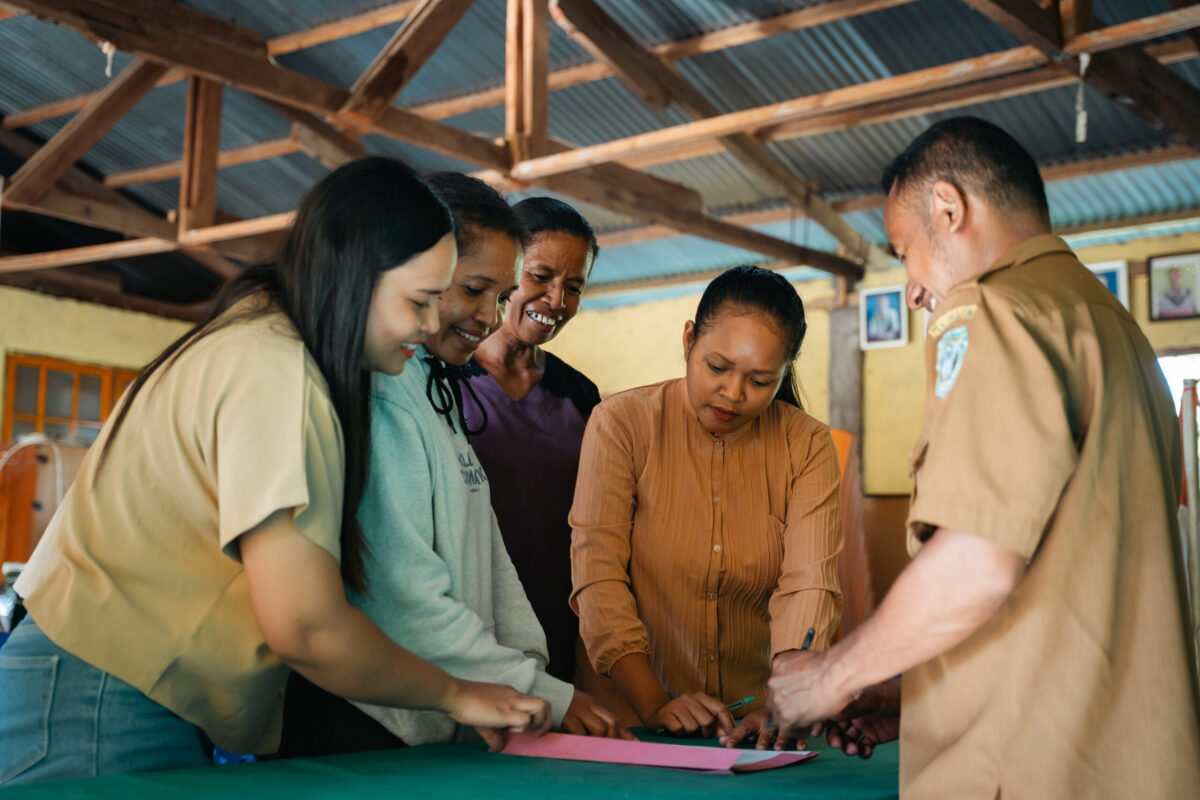
“In creating these cards, we involved pregnant women, PKK workers, and neighborhood association (RT) leaders—most of whom are women. We involved all of them so they would share in caring for pregnant women. That way, we all feel a sense of responsibility, and the burden feels lighter,” she emphasized.
The Smart Card for Pregnant Women was designed and agreed upon in collaboration with the community, so it received a positive response when it was officially introduced in the village.
The Impact of the Referral Process
“The midwife acted quickly by immediately referring her to the community health center, where she received care. Thank God, she had a normal delivery. After giving birth, my wife had an implant inserted,” he recalled.
According to Igen, the existence of communication-based referral systems such as the Pregnant Women’s Smart Card has encouraged behavioral changes among the public. Fewer women are giving birth at home and more are utilizing health services. In fact, mothers are now willing to use contraception after childbirth.
This experience demonstrates that communities can create simple yet effective solutions to overcome barriers to accessing reproductive health services. By designing referral pathways tailored to the needs and conditions of their villages, communities can act quickly and foster a sense of shared responsibility in helping women access reproductive health services and care for pregnancy emergencies.