
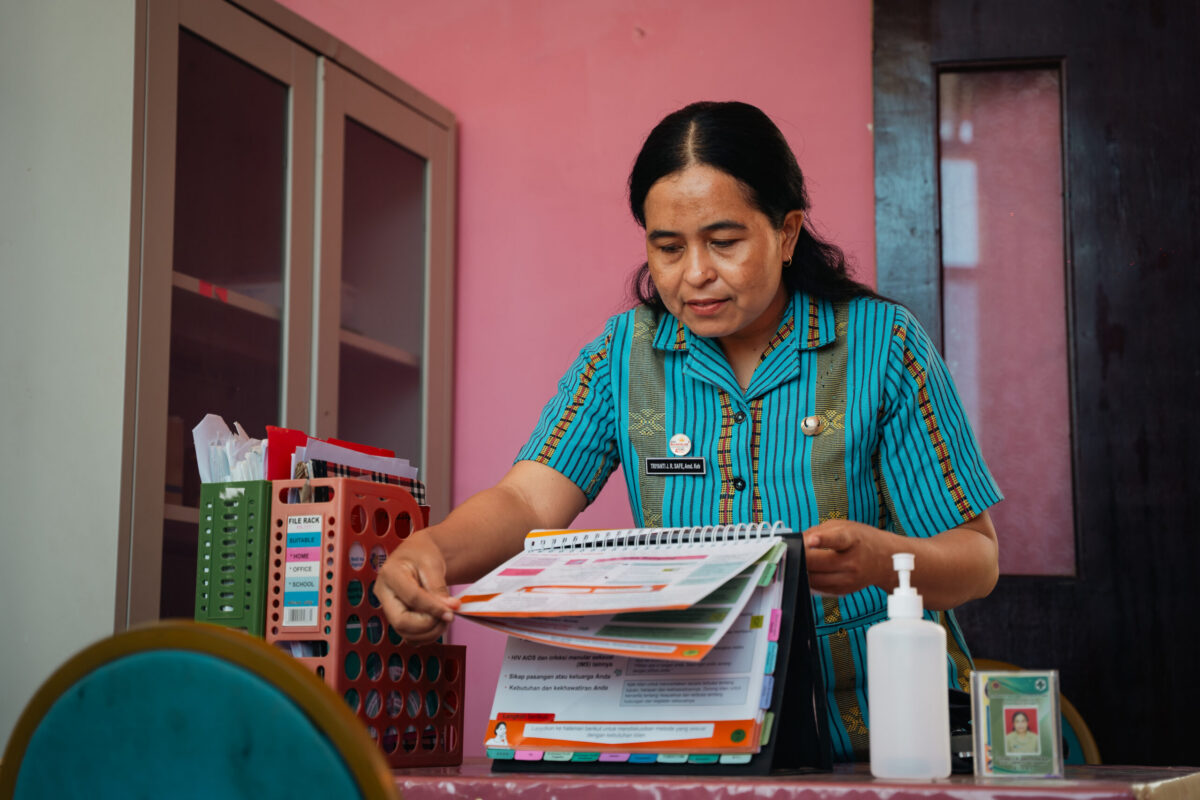
The Sulamu Community Health Center in South Central Timor Regency faced a shortage of trained staff in 2023. Midwife Triyanti Jeli Rosalina Safe said that at that time, only two of the 15 midwives had been trained in contraception. Without training, midwives cannot provide long-term contraceptive methods such as implants, which poses a barrier when a woman desires a long-term contraceptive method.
The Kupang Regency Health Office had not previously prioritized the family planning program during its supervision and monitoring of maternal and child health programs. However, the Health Office plays a crucial role in periodically assessing the quality of family planning services.
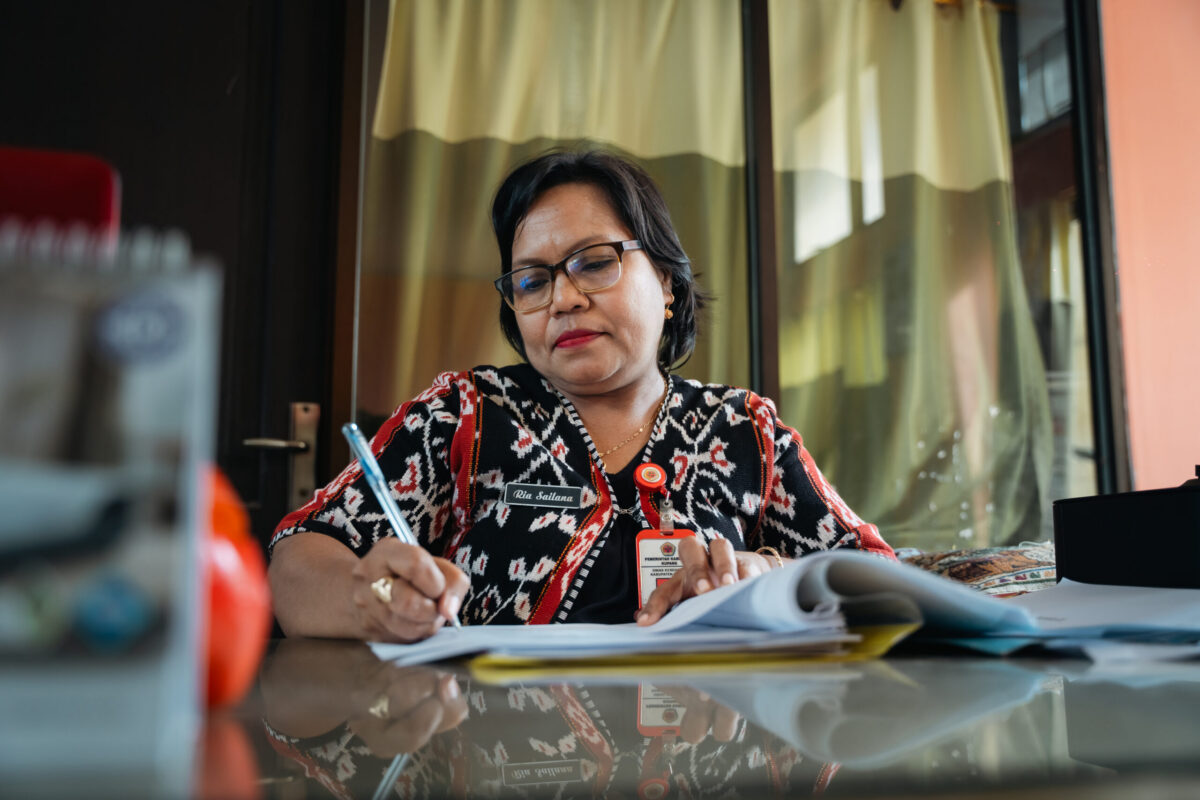
“In Kupang Regency, when it comes to monitoring and supervision, we don’t focus specifically on family planning. We just focus on providing services,” said Mariana Arkon Sailana, Head of Maternal and Child Health at the Kupang Regency Department of Health, Population Control, and Family Planning.
To strengthen the contraceptive health care system in NTT, the IPAS Indonesia Foundation is implementing a range of initiatives, from training midwives and providing monitoring and supervision support to offering budget training for stakeholders. These interventions are being carried out in TTS Regency, Kupang, and East Flores through the TAKENUSA (Joint Commitment to Women’s Health in Nusa Tenggara) program from 2023 to 2026.
Changes in Contraceptive Service Trends
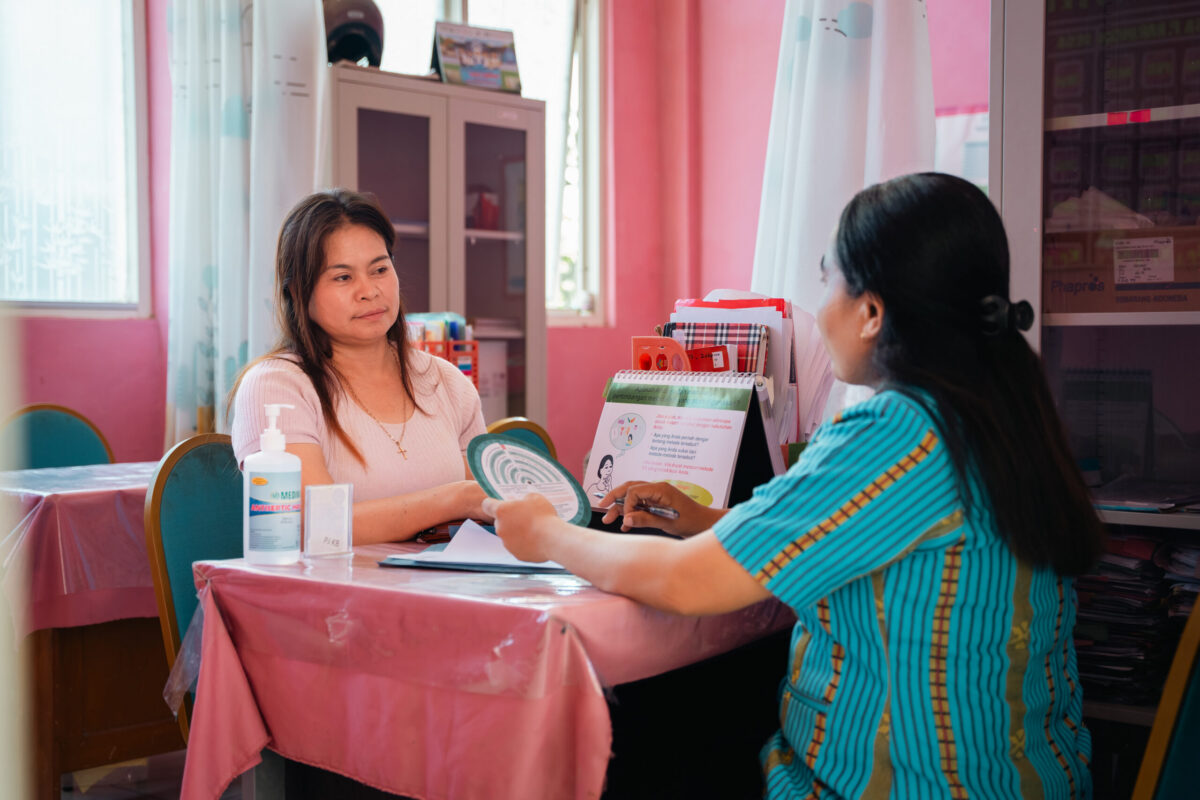
The contraception training organized by the IPAS Indonesia Foundation used the Ministry of Health’s curriculum and modules and consisted of eight days of online training and five days of in-person training, with trainers from the NTT Provincial Secondary Clinical Training Center serving as resource persons. The training provided new knowledge, particularly regarding the insertion of long-acting contraceptive devices such as implants and IUDs. This training also raised awareness of the importance of infection prevention and the counseling process.
Triyanti added that a direct result of this training has been a growing trend toward long-acting contraceptive methods. “At the Sulamu Community Health Center, following the training, the use of certain contraceptive methods has increased, although injections remain the most popular. Implants are second, and IUDs are third,” she emphasized.
Number of women receiving contraceptive services*
2024
2025
January–June 2026
More targeted supervision and monitoring
After strengthening the capacity of health workers, the IPAS Indonesia Foundation provided support to the health departments in monitoring and supervising contraceptive services in the three districts. This process began with the creation of inspection checklists and continued with direct guidance for health department staff.
Mariana said, “With this checklist, we can collect and analyze data. In the past, during monitoring, we would just collect data, but that data wasn’t evaluated,” she explained. The checklist helps in analyzing conditions, quality, and needs to improve contraceptive services, medication requirements, and the number of trained health workers.
One of the findings from the family planning service supervision that requires follow-up is the large number of midwives who have not yet received training. Training is a top priority for improving access to family planning, as an increase in service coverage was observed following the family planning training conducted by the IPAS Indonesia Foundation.
Mariana and her staff prepared a budget proposal for the Ministry of Health after attending a training session on budget preparation for reproductive health issues, supported by the IPAS Indonesia Foundation. The budget was approved by the Ministry of Health, and family planning training was conducted in August 2026 for 12 midwives and one general practitioner in Kupang Regency.
The success of the TAKENUSA program does not depend solely on trained health workers and monitoring by the health department. Rather, it also requires collaboration and commitment from various stakeholders.