
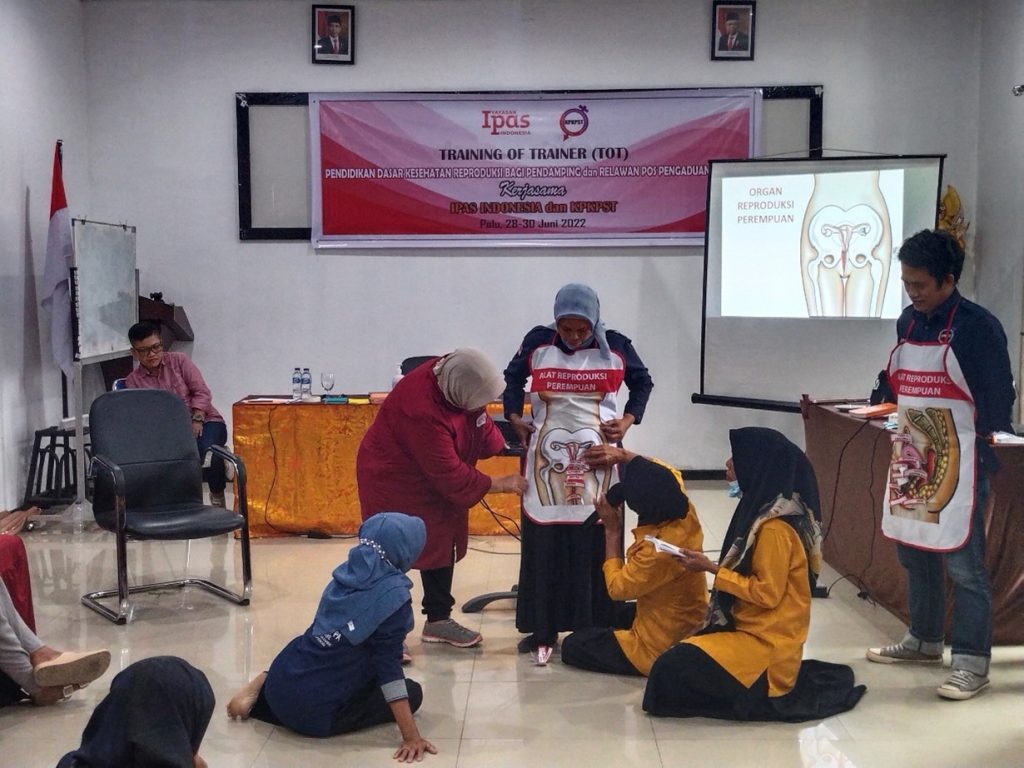
The IPAS Indonesia Foundation once again facilitated capacity building for 28 community facilitators and volunteers of KPKPST through a Training for Trainers (ToT) on Sexual and Reproductive Health Rights (SRHR), held from June 28-30, 2022, at Jazz Hotel Palu.
This training was opened by Soraya Sultan, Director of KPKPST, with a presentation of data on women’s reproductive health cases received by the KPKPST reporting center. Some of these include cases of rape, child marriage, incest, and stunting, which frequently occurred after the natural disaster that struck the Sigi and Donggala regions of Central Sulawesi.
On a daily basis, the volunteers and community facilitators, who also manage the Women-Friendly Space (RRP), receive complaints and provide assistance for cases of sexual violence in their respective communities.
Knowledge of Sexual and Reproductive Health Rights (SRHR) for case facilitators is deemed necessary so that facilitators can offer a wider range of options when proposing case resolutions to victims.
Knowledge of Sexual and Reproductive Health Rights (SRHR) is also expected to be disseminated to women and girls through discussions in their respective communities.
On the first day of this training, participants learned about the concept of Sexual and Reproductive Health Rights (SRHR); the differences between reproduction and sexuality, the development of SRHR at international and Indonesian levels, and reproductive rights. Participants learned about the differences between reproductive and sexual organs with the help of ‘reproductive organ’ aprons. The training facilitator, Dr. Reny Bunjamin, challenged participants to name reproductive and sexual organs in the Kaili language, spoken by the indigenous people of Central Sulawesi. This will be very useful when they facilitate discussions in their respective communities.
In the next module, participants learned about pregnancy and pregnancy complications, pregnancy planning with natural contraception, such as calculating fertile periods, as well as with conventional contraception like condoms, vasectomy, implants, injections, and so on. This module continued with knowledge about the right to Post-Abortion Care (PAC), which is a right for women who experience miscarriage.
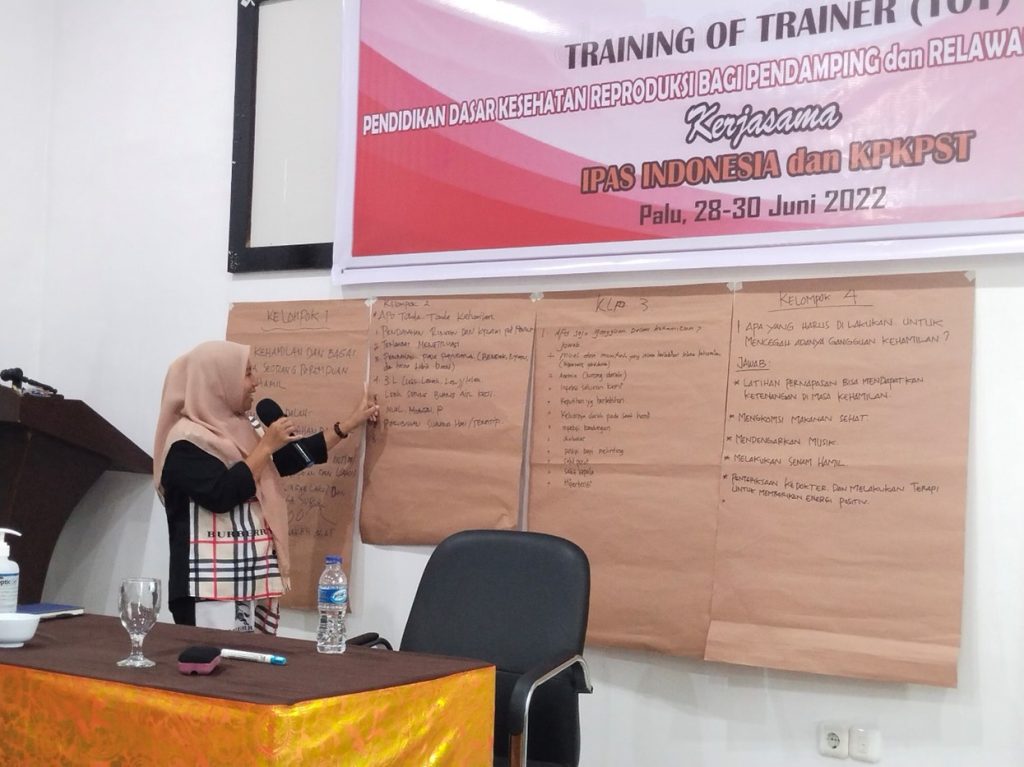
The participants, mostly housewives in their 40s, were very active in discussions and sharing their experiences, both personal and from cases they assisted, related to the aforementioned topics, making the class atmosphere very lively.
The last day concluded with the development of a follow-up plan for the training participants on how they would organize discussions to educate the community about Sexual and Reproductive Health Rights (SRHR). (*)