
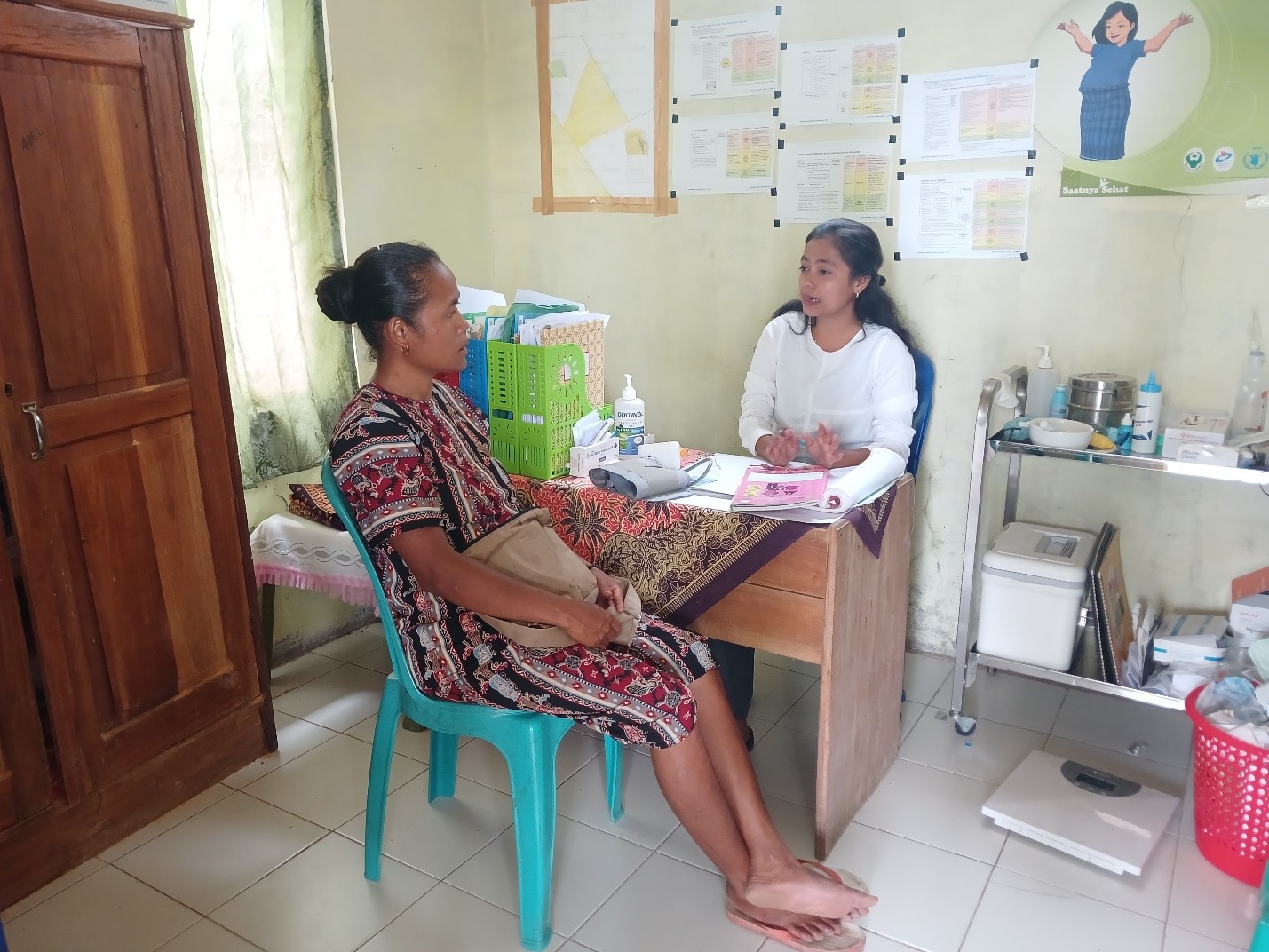
Pregnancy planning is very crucial in areas with limited access to reproductive health services. This has been a key learning for Midwife Mery Amalia Patnay during her practice in Sunu Village, South Central Timor Regency, since 2021. She consistently strives to assist women in planning their pregnancies through counseling.
Midwife Mery once handled a rather challenging pregnancy case. “There was a pregnant woman who was expecting her 12th child at around 50 years old. We had already made a planned referral, so the patient was supposed to give birth at the hospital,” she stated.
However, “due to the rain, the family reasoned they did not want to go to the hospital,” she added. Despite this, village officials had already called an ambulance to refer the mother. “The patient refused because she had no money. It was then that the village officials provided transportation funds from the village budget,” Midwife Mery recalled.
Stemming from this incident, she encourages every woman in Sunu Village to meticulously plan their pregnancies to avoid unforeseen circumstances. With this planning, she finds it easier to prioritize available services. This is crucial for Midwife Mery as she is the only midwife in the village.
“Because there is only one midwife here, and the distance between hamlets is considerable, what I do is home visits, especially for high-risk pregnant women and those with unplanned pregnancies. During these visits, I provide counseling,” she added.
Changing behavior to better plan pregnancies is not an easy task. “The main obstacle here is the existing tradition that for women to use family planning, they must first be taken to church before they can use it. There are even families where the husband makes the decision regarding family planning,” she emphasized.
To encourage this change, Midwife Mery collaborates with the pastor and several parties, including village officials and youth groups. “I once conducted a home visit to a pregnant woman with the pastor’s wife and the village head because at that time, the pregnant woman was expecting her 6th child and had never used family planning,” she added.
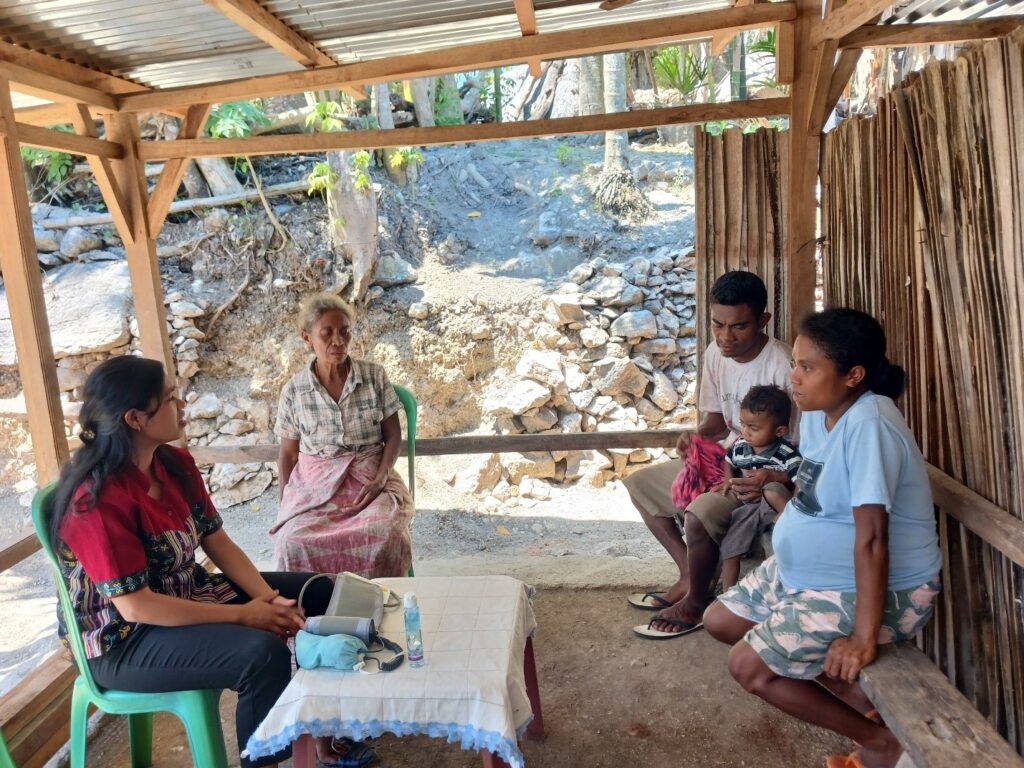
The family also refused to be referred to the Community Health Center (Puskesmas) for delivery. “After the visit and [the pastor] prayed for the pregnant woman, she finally agreed to go to the Community Health Center. She agreed to use an implant after my counseling,” Midwife Mery recalled.
Family Planning Training Enhances Confidence in Counseling
Midwife Mery acknowledges that the midwife training organized by IPAS Indonesia Foundation has enhanced her skills in providing counseling for pregnancy planning. “I have become more confident in providing proper and effective counseling to pregnant women,” she admitted.
For instance, she began encouraging women with pregnancies beyond 32 weeks to plan their pregnancies. “Therefore, what I promote to pregnant women is long-term family planning,” she added.
“Why do I need to counsel them to switch to long-term family planning? Because sometimes they use short-term family planning. And they migrate out of town. Well, during their migration, they sometimes forget their injection dates,” she concluded.