
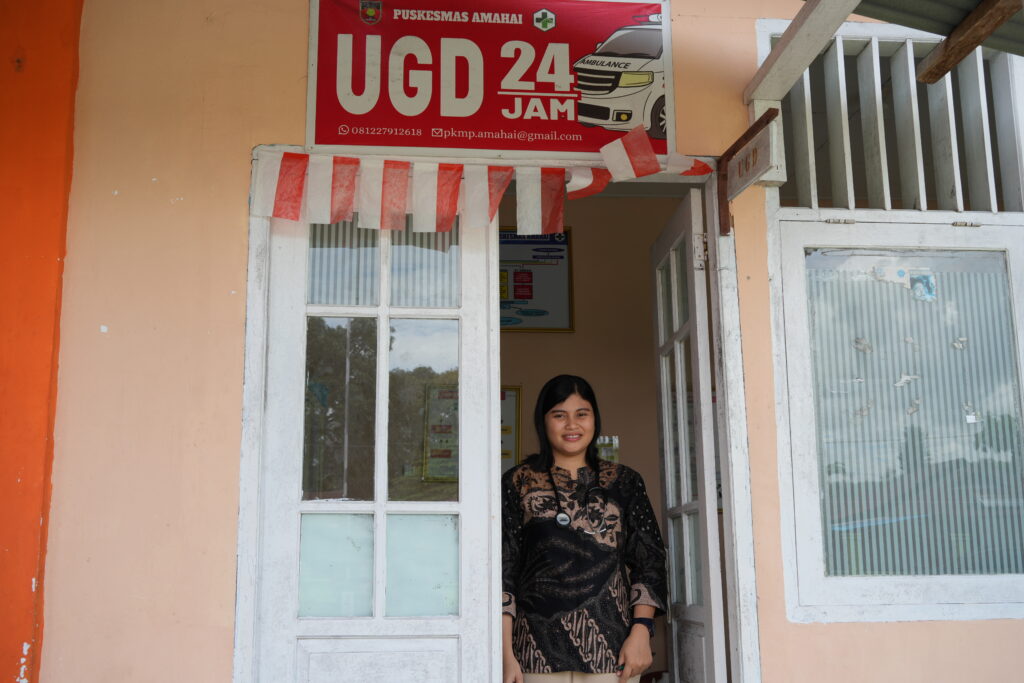
“Yes, I relied on my own instincts when handling victims of violence.”
That brief statement illustrates a much larger reality regarding the landscape of gender-based and sexual violence (GBSV) services in island regions: the limited number of healthcare workers capable of providing care for victims.
In fact, the results of the 2024 National Women’s Life Experience Survey show that three archipelagic regions—Maluku, East Nusa Tenggara, and Papua—recorded the highest prevalence of violence. The report also emphasizes the need to consider geographical factors that make access to services increasingly difficult.
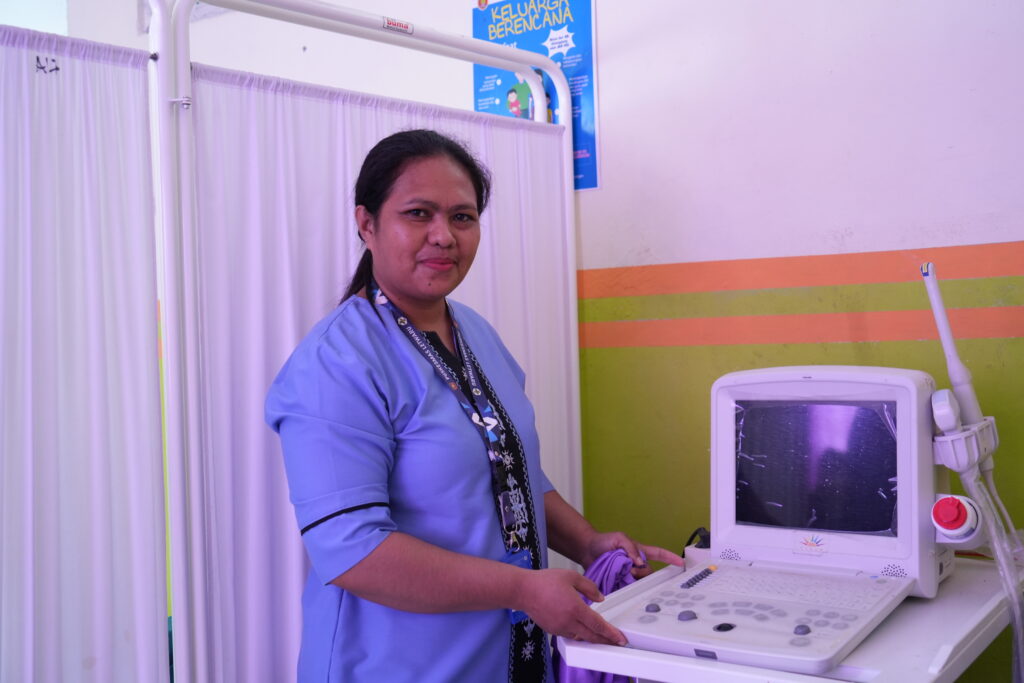
Midwife Wisya Mausara is a midwife at the Amahai Community Health Center (Puskesmas) in Central Maluku Regency who once suspected a patient was experiencing violence during pregnancy. Throughout her 13 years of work, she had never received specialized training in handling victims of violence. “So there was no framework or guidance for providing violence-related services. The problem is, without attending training, I also didn’t know what I should eventually do,” she said.
Her suspicions at the time proved correct. “At that time, there was a pregnant patient. During every visit, she appeared gloomy. So I asked why, but she didn’t want to talk. The next day, it turned out the police had already picked up [her husband] because her own family was outraged by the violence inflicted on the pregnant woman,” she recalled.
Independent Initiatives from Nurses
Unlike Midwife Wisya, nurse Martiye Mariana Kakiay, who currently works at the Letwaru Community Health Center in Central Maluku Regency, attended online training on handling violence cases from the Ministry of Health in December 2022. One of the materials she remembers most is regarding the creation of rape kits. However, because the training was conducted online, she felt she did not sufficiently understand the practical application.
“But because the training was online, we didn’t see it firsthand and couldn’t follow along properly. That’s why I (beta) tried to make a rape kit for use here, but a very simple one. I even made the box out of cardboard. Basically, everything was very simple,” she said.
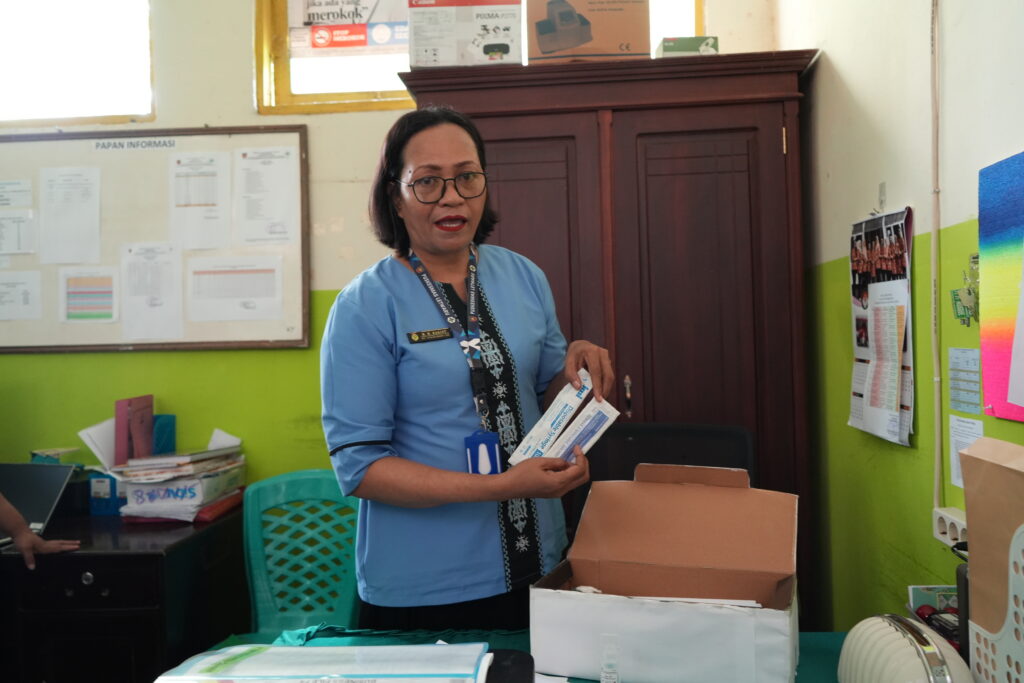
At her workplace, only she and one doctor attended the training. However, that doctor was later transferred to Banda Naira.
“Because when handling violence, it must be a doctor; a doctor must handle it, and then I assist the doctor in that matter,” she added.
The Dilemma of Handling Violence in the Archipelagos
The lack of trained healthcare workers is not the only challenge in the context of the archipelagos in Eastern Indonesia. Social stigma and community norms that perpetuate violence can hinder survivors from seeking help. At the same time, survivors face difficult situations in accessing services. They must cross to other islands to obtain healthcare, psychosocial support, and legal assistance. This is a journey that requires significant time, cost, and mental readiness.
Ipas Indonesia Foundation, through the ARUMBAE project (Capable and Empowered Women to be Free from Violence), has begun developing a GBSV service model within the archipelagic context of Maluku Province and Central Maluku Regency. This project was officially launched in September 2025.
As an initial step, an assessment of healthcare facility readiness in providing GBSV services was conducted at five community health centers and three regional hospitals selected as models. The scope of this readiness analysis component includes human resources capable of providing services, availability of medicine and equipment, clinical management guidelines, and networks.
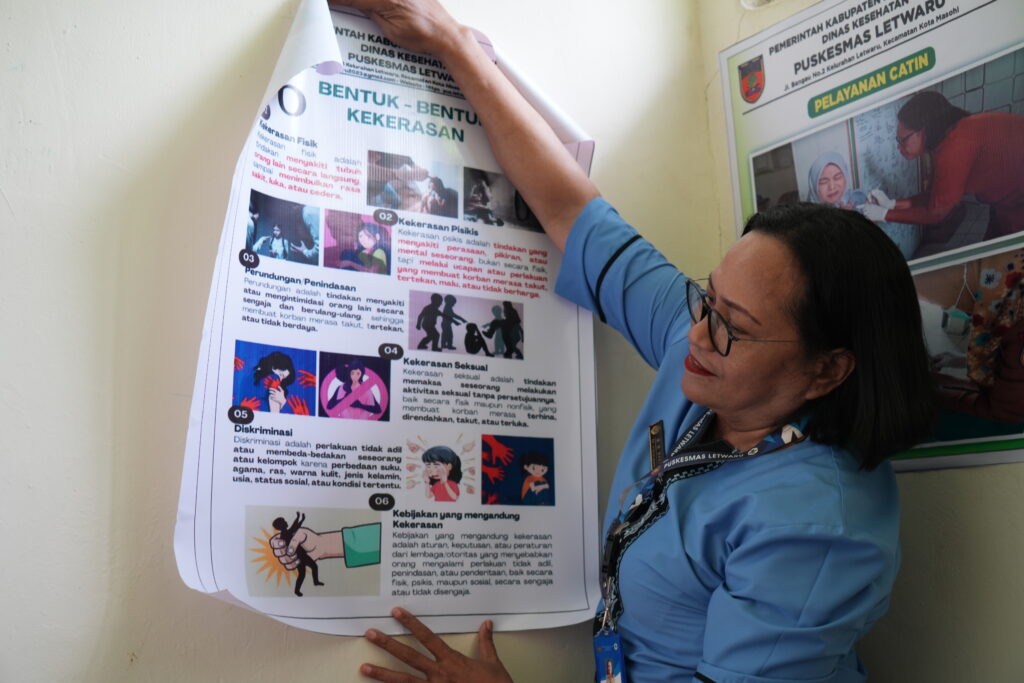
These findings serve as a fundamental basis for strengthening the capacity of healthcare workers and medical personnel in providing GBSV services. From December 2025 to January 2026, Ipas Indonesia Foundation trained 58 healthcare workers and medical personnel, consisting of nurses, midwives, general practitioners, and obstetricians/gynecologists from the healthcare facilities selected as GBSV service models.
Through this training, GBSV victims and survivors can receive high-quality, woman-centered services tailored to their needs.