
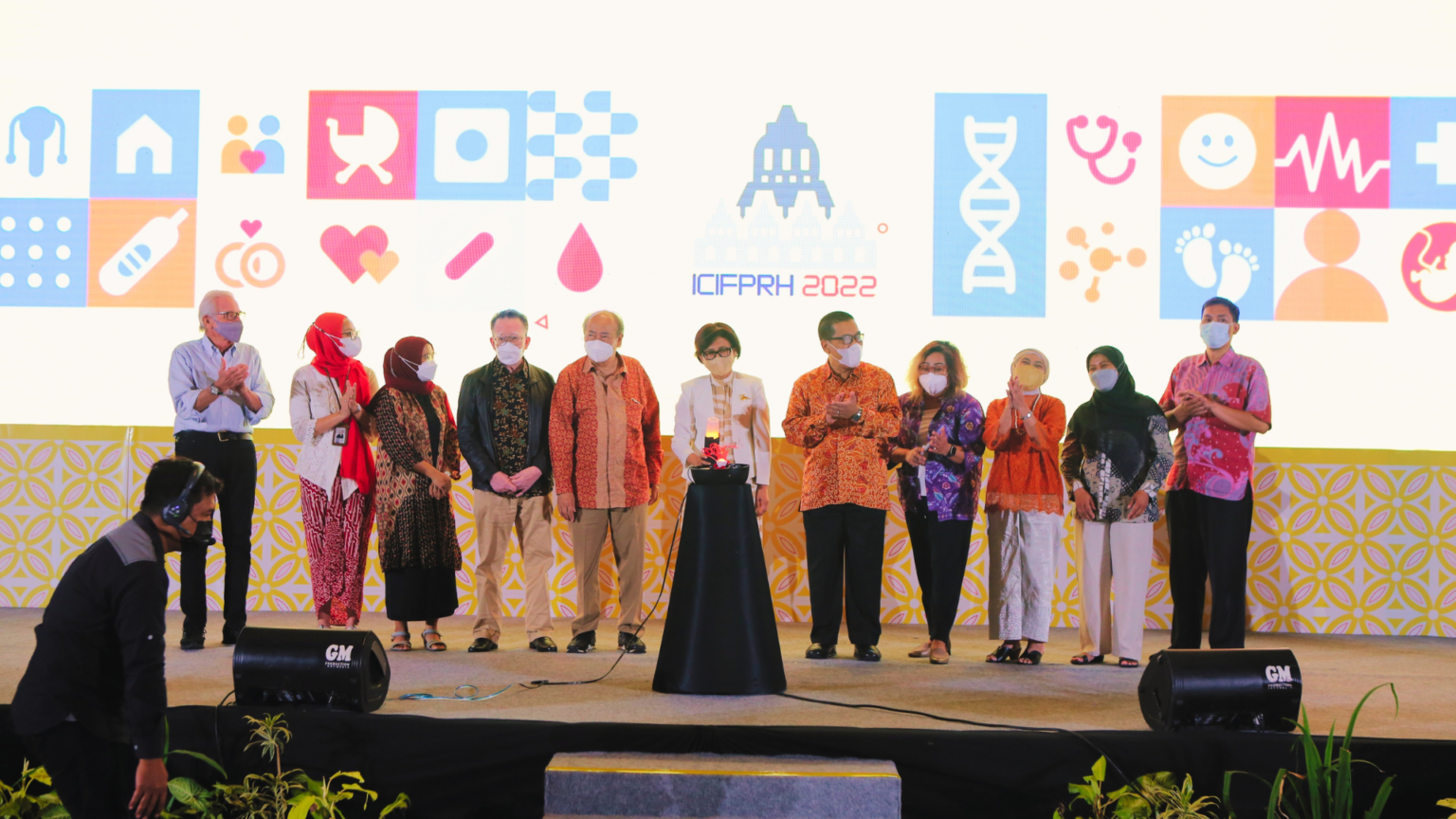
The International Conference on Family Planning and Reproductive Health in Indonesia, or the 2nd International Conference on Indonesia Family Planning and Reproductive Health (ICIFPRH), held from August 23-25, 2022, adopted the theme “Accelerating the promise of 3 Zeros in Indonesia”.
The 3-Zeros theme highlights three main issues: (1) Zero preventable maternal deaths, or ending maternal deaths; (2) Zero unmet need for family planning, or ending the unmet need for family planning; and (3) Zero violence or harmful practices, or ending gender-based violence and harmful practices against women and girls. In Indonesia, these three issues require significant attention, particularly in ensuring access to and services for sexual and reproductive health.
Data indicates that the Maternal Mortality Rate (MMR) in Indonesia remains high at 305 per 100,000 live births (SUPAS, 2015). This figure is far from the reduction target set in the National Medium-Term Development Plan (RPJMN) of 183 per 100,000 live births by 2024.
Meanwhile, the Covid-19 pandemic also contributed to an increase in the discontinuation rate of family planning due to disrupted access to services and commodities. Consequently, contraceptive services were hampered as many mothers feared visiting healthcare facilities.
During the Covid-19 pandemic, cases of sexual violence also increased. The Survey on Women’s Life Experiences (SPHPN, 2021) revealed that 1 in 4 women aged 15-64 years had experienced violence in their lifetime. The 2020 Annual Records of the National Commission on Violence Against Women (CATAHU) showed an eight-fold increase in reported cases of violence against women and children compared to data from the previous 12 years.
The Rector of Gadjah Mada University, Prof. Dr. Ova Emilia, M.Med., Ed, Sp.OG (K), Ph.D, stated that maternal deaths due to childbirth remain a problem in Indonesia. In Yogyakarta, for example, the MMR has not decreased despite a sufficient number of healthcare personnel.
“Deaths will continue to occur if family planning is not implemented, if women are forced to continue pregnancies when they wish to stop. Therefore, pregnancy must be desired by both parties. Automatically, partners, families, and even society must strive for the mother’s safety. If there are still significant deaths, then this remains a problem.”
The Head of the ICIFPRH Consortium and Committee, Prof. Siswanto, highlighted that 3 Zeros is not just a promise but must be translated into action.
“Three zeros must be translated into implementation, monitoring, and evaluation at all levels of government. Decentralization should not be an obstacle to collaboration in improving the quality of care provided,” he stated.
Five important recommendations resulting from this conference include:
- Efforts to achieve the 3-zeros targets, along with healthcare services, prevention, and advocacy related to Family Planning and Reproductive Health, must be an inseparable part.
- Indonesia must view Family Planning and Reproductive Health as accessible and high-quality for all segments of society, involving both public and private sectors as part of the effort to achieve zero maternal deaths, zero unmet need, and zero violence and harmful practices against women.
- Innovation in strategies for achieving the 3-zeros targets needs to be implemented not only at the national level but at all levels (Province, Regency, District, and Village). Thus, a Golden Indonesia by 2045 can be achieved.
- Strategic innovation needs to consider a program framework using life course and life cycle approaches.
- Every intervention towards the 3-zeros targets needs to begin from pre-conception until women enter old age, including special attention to the 8000 First Days of Life (HPK).
As a member of the ICIFPRH organizing consortium, the IPAS Indonesia Foundation expressed its commitment to continuously support collaborative efforts to achieve the 3-zeros. In line with the Chair of the ICIFPRH 2022 Committee, the Director of the IPAS Indonesia Foundation, Dr. Marcia Soumokil, MPH, emphasized that good public service governance requires strong cooperation between the government, private sector, and civil society, which needs to be strengthened to achieve the 3 Zeros target.
“These Three Zeros are a target promise for the elimination of maternal deaths, unmet need for family planning, and gender-based violence. Whether this target promise will be achieved or not depends on all of us. ICIFPRH was initiated as a collaborative platform to realize this promise. Let us work together according to our respective fields to realize this target promise for a healthier and more advanced Indonesia,” she concluded.
About ICIFPRH
International Conference on Indonesia Family Planning and Reproductive Health (ICIFPRH) is a major forum involving international and national scholars, policymakers, program managers, international and national NGOs, development partners, professional associations, and practitioners to discuss various issues of family planning and reproductive health in Indonesia. Since its first implementation in 2019, ICIFPRH was held as an online scientific forum in 2021. In 2022, the conference was held offline from August 23-25, 2022.
This conference was initiated and organized by the consortium “A Champion of Indonesia Family Planning and Reproductive Health,” consisting of the Reproductive Health Center, Faculty of Medicine, Public Health & Nursing (FKKMK), Gadjah Mada University, Healthy Generation Meeting Space (Rutgers Indonesia), Faculty of Public Health (FKM), University of Indonesia, UNFPA, IPAS Indonesia Foundation, Cipta Foundation, Jalin Foundation, Jhpiego, PKBI, Aliansi Satu Visi, and Health Foundation.