
The ARUNIKA Project (Empowered Women for an Indonesia Free from Violence) was launched in November 2024. One of its objectives is to strengthen health services for victims of Gender-Based and Sexual Violence (GBSV) in three locations in Central Java: Surakarta, Sukoharjo, and Semarang.
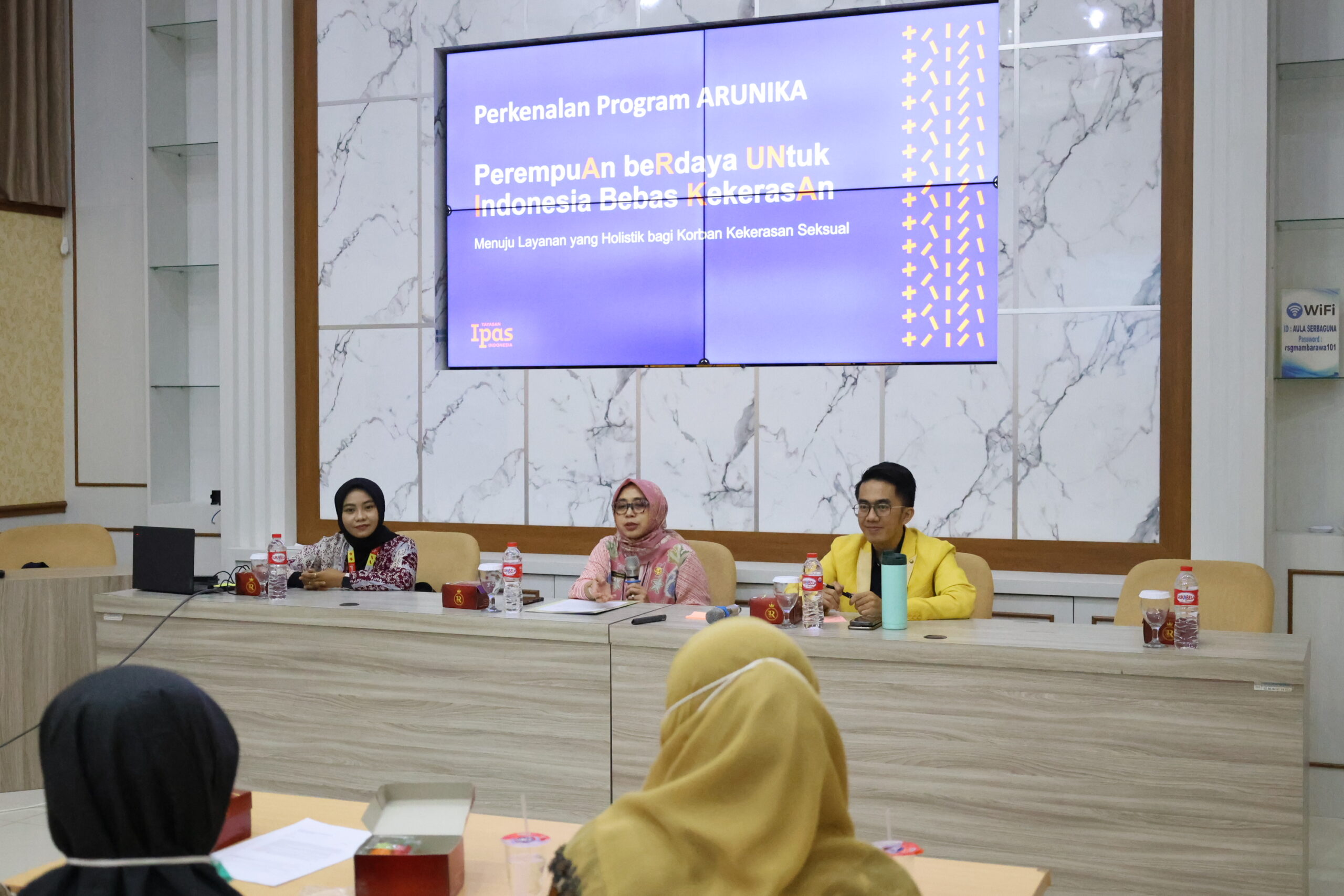
To initiate the project, the ARUNIKA team conducted whole-site orientations at 12 health facilities within the project’s scope. These activities took place from February 18 to 27, 2025. Whole-site orientations are introductory and project planning sessions specifically for healthcare providers. The primary goal of these activities is to build project understanding and clarify the roles of health facility personnel until the project concludes in 2027.
Dr. Hasti Wulandari, M.KM, Director of dr. Gunawan Mangunkusumo Ambarawa Regional General Hospital, hopes that this activity can strengthen her institution in providing services for GBSV victims.
“We hope that the ARUNIKA Program can help strengthen the existing Team for Violence Against Women and Children (KtPA) at Gunawan Mangunkusumo Regional General Hospital in handling KtPA more comprehensively, and we are committed to fully supporting this program,” stated Dr. Gunawan.
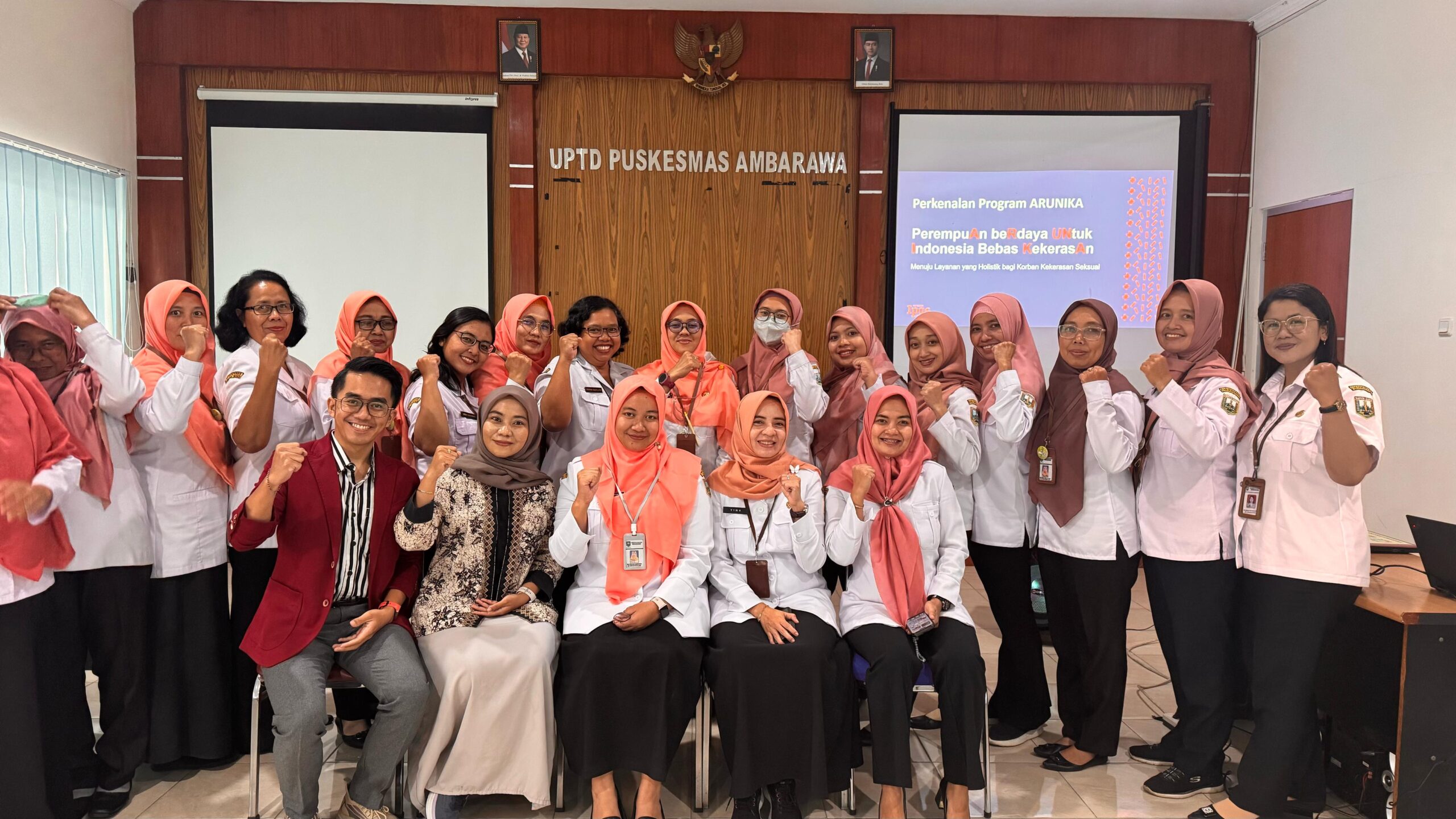
Meanwhile, Vina Dhian, Staff of Family Health and Nutrition at the Semarang Regency Health Office, highly appreciates this activity. According to her, this whole site orientation provides an overview of the ARUNIKA program.
“We will continue to support and are ready to oversee the next planned activities, including training on Violence Against Women and Children (KtPA), and we will coordinate and encourage health facilities to provide quality services for victims of violence against women and children,” she added.
In addition to the program introduction, participants were invited to explore their individual values and beliefs to understand their influence in providing services.
Recognizing these values is crucial because many service providers are still influenced by their personal values, such as religion and culture, when providing healthcare services to GBSV victims. Ideally, services should be provided based on the victims’ needs and wishes, in accordance with existing regulations.