
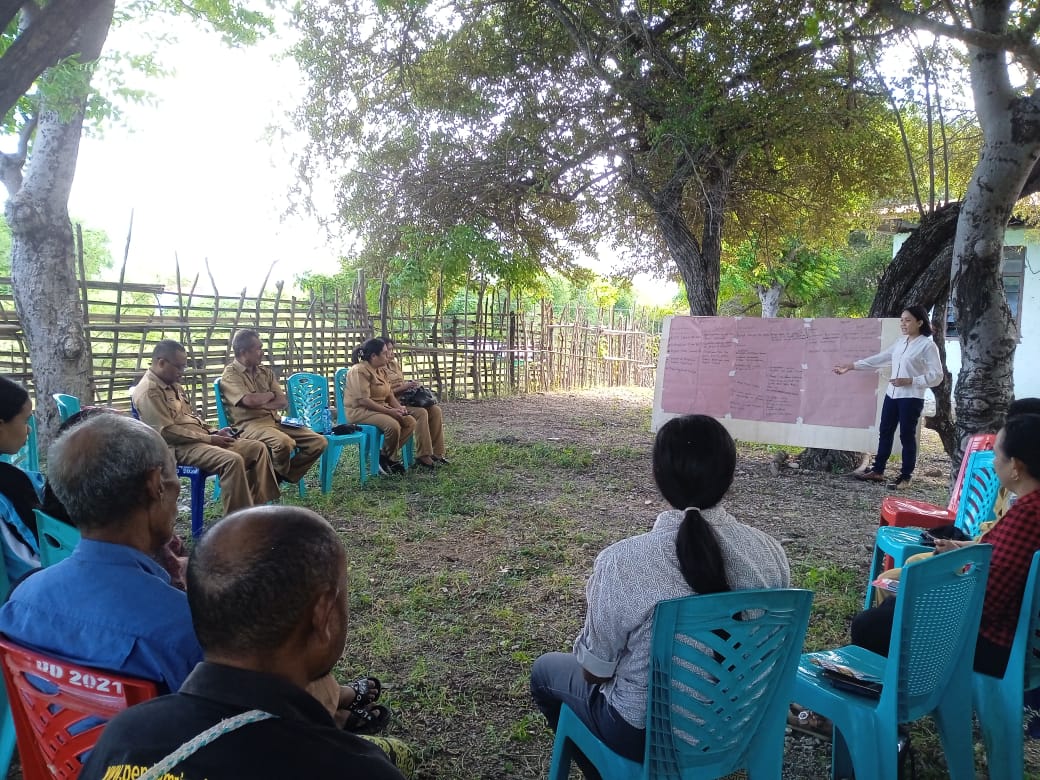
The Village Development Planning Meeting (Musrenbang) is a crucial process for the community. Musrenbang serves as the initial stage to accommodate community aspirations, including reproductive health (kespro) issues that often lack women’s participation. Recognizing the importance of this issue, IPAS Indonesia’s partner, CIS Timor Foundation, organized a workshop to encourage communities to voice reproductive health concerns.
During April 2024, CIS Timor Foundation conducted this workshop in four villages (Bena, Lanu, Linamnutu, and Sunu) in South Central Timor Regency, East Nusa Tenggara. The activity was attended by village officials such as Village Heads, Village Facilitators, Village Midwives, Heads of Government Affairs, representatives of PKK (Family Welfare Movement), Posyandu cadres, youth representatives, religious leaders, traditional leaders, community leaders, and women leaders.
“Specifically in this workshop, the community presented ideas or proposals in the health sector, particularly on reproductive health (kespro) and Maternal and Child Health (KIA) issues in their respective villages, which were then addressed by facilitators from the Community Empowerment Agency,” said Wemrits Nenohaifeto, a staff member of CIS Timor Foundation.
The main topic of discussion during the workshop was the persistent issue of many pregnant women giving birth at home. This is attributed to difficult access to health facilities, both due to distance and road conditions. Additionally, the community also discussed the high rate of unintended pregnancies among adolescents.
However, South Central Timor Regency itself has Regional Regulation (Perda) No. 6 of 2013 concerning Services for Maternal, Newborn, and Under-Five Children’s Health, commonly abbreviated as KIBBLA. This Perda comprehensively regulates counseling, prevention, treatment, and recovery related to maternal, infant, and child health.
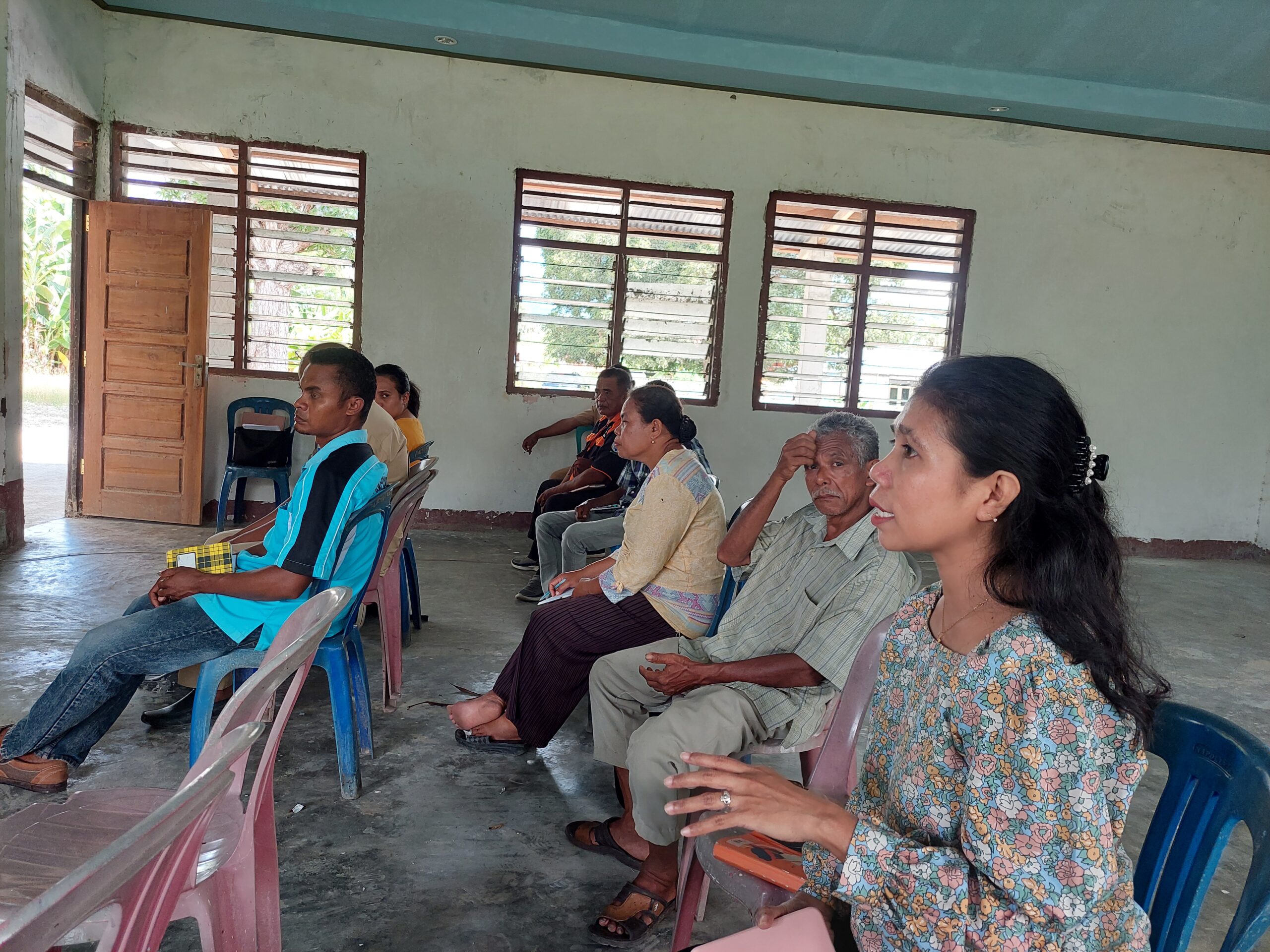
Nevertheless, the implementation of this Perda remains a challenge. Among these challenges is the lack of consistency from villages in implementing the regulation. This is due to the absence of village regulations to support the KIBBLA Perda, coupled with low community awareness. In fact, the Perda also stipulates fines for residents who do not comply. For instance, pregnant women who do not give birth in health facilities will be fined IDR. 200.000. Furthermore, mothers who do not use contraception after giving birth are also subject to a fine of IDR. 100.000.
The implementation of the KIBBLA Perda then became a significant discussion during the workshop. One participant, Mr. Onesimus Feliks, Head of Government Affairs Section of Bena Village, stated that the implementation of this KIBBLA Perda requires special attention for each village. “In the near future, I will communicate with the BPD (Village Consultative Body) to promptly establish the KIBBLA Village Regulation (Perdes) in Bena,” he said.
Furthermore, his party will also collaborate with churches to disseminate information regarding unintended pregnancies among adolescents. “We, at the church, have already implemented the regulation we discussed (KIBBLA Perda) and are currently conducting rapid catechesis with a swift, persuasive approach for unmarried young people who are already cohabiting,” he added.
Given the importance of the KIBBLA Perda, the proposal to be submitted at the Village Musrenbang (Musrenbangdes) during the workshop concerns the creation of derivative regulations. This aims to provide villages with a strong foundation for implementing the Perda. “The KIBBLA Perda already encompasses all regulations concerning Maternal, Newborn, and Child Health, including the fines to be imposed for violating its rules,” said Sherly Y. Sinlae, a staff member of CIS Timor Foundation.
Regarding the proposals discussed during the workshop, one participant, Ms. Indah Radja, who is also a religious leader, expressed optimism that the proposals would be considered in the Musrenbang. According to her, reproductive health issues need to be addressed by each village.
“I am very optimistic because these village challenges are related to stunting, malnutrition, and maternal and infant health. Therefore, a pregnancy itself must be well-planned, and even childbirth must be carefully planned. If premarital sexual behavior occurs, all those aforementioned problems will automatically arise and become long-term struggles,” she emphasized.
This workshop is part of the TAKENUSA project (Joint Commitment for Women’s Health in East Nusa Tenggara). The objectives of this project include providing technical support to healthcare providers to strengthen Post-Abortion Care (APK) services, increasing access to contraceptive services, and providing education related to reproductive health.