
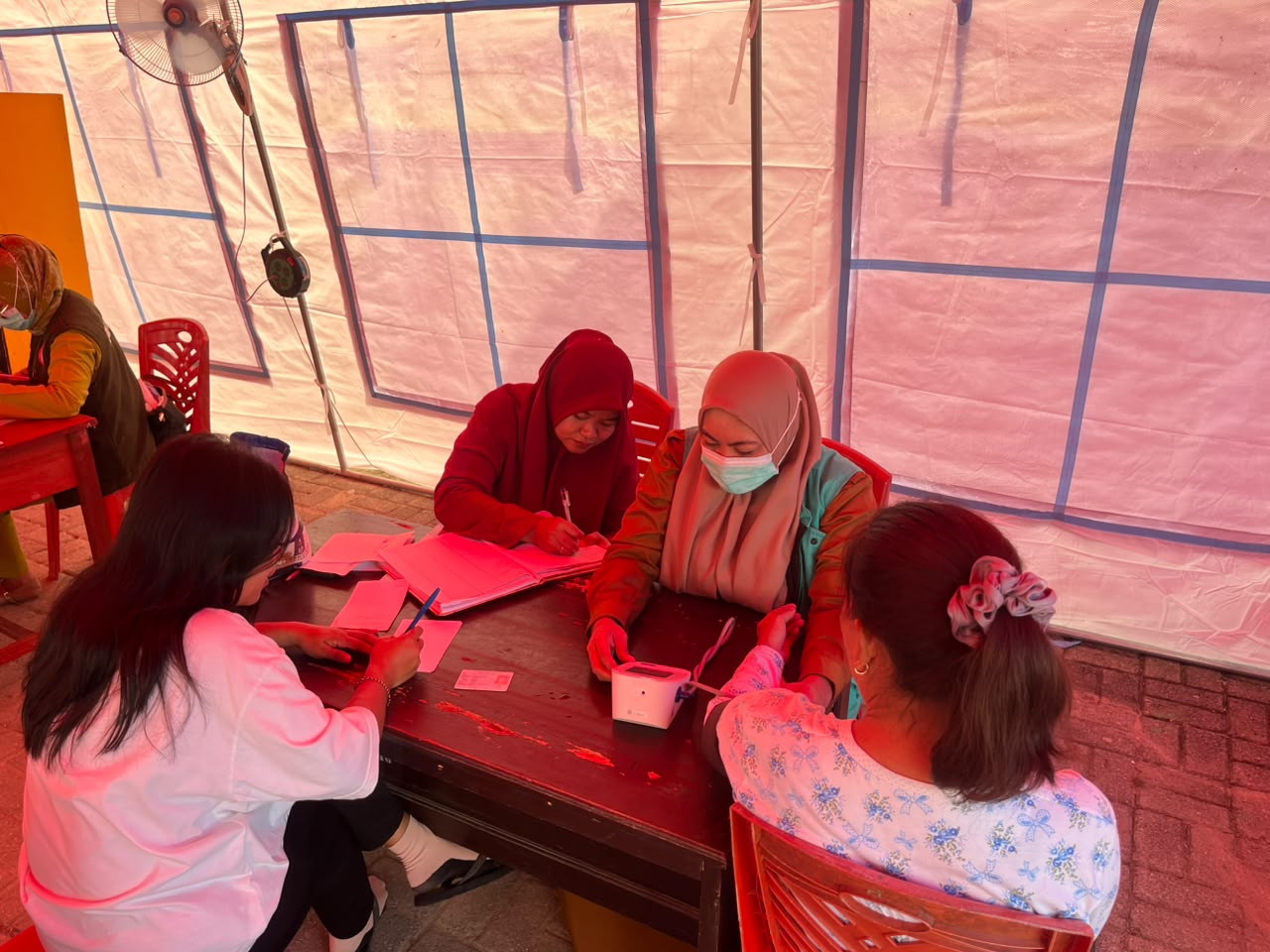
A 6.7-magnitude earthquake struck Central Sulawesi on June 16, 2026. The Nokilalaki Community Health Center, located in Sigi Regency, was one of the buildings affected. The roofs over the patient care area and the administrative offices collapsed. Amid this situation, health services—particularly reproductive health services—had to continue.
The head of the Nokilalaki Community Health Center, Muzna, S.Kep., Ners, was still participating in a training session on document preparation for disaster health services in Palu when the earthquake struck. Furthermore, the health center was closed at the time due to a holiday. She coordinated remotely with staff and relevant agencies to ensure services continued to operate despite intermittent communication signals.
“I then asked permission to leave the training session. At that time, the deputy governor of Central Sulawesi was already there, and there were already nine patients. They were being sheltered at a resident’s home that had a spacious porch. That night, all the patients had been treated and referred,” Muzna recalled.
He added that the general patient care tent had been set up as early as the second day after the earthquake. The tent dedicated to reproductive health services, however, was not set up until June 19, following coordination with the Regional Disaster Management Agency (BPBD) and the Health Department.
“There was a husband who told our midwife that his pregnant wife was complaining of stomach pain. Wepicked her upin an ambulance and took her to the maternal and child health tent. Based on the ultrasound results, there were no signs that she was about to give birth, so we sent her home for the time being,” he added.
In addition, contraceptive services are also available in the tent. Four women chose the injectable contraceptive method. “They might still feel shy about getting an IUD because the family planning tent is too large, so we’ve set up partitions to create private rooms,” she said.
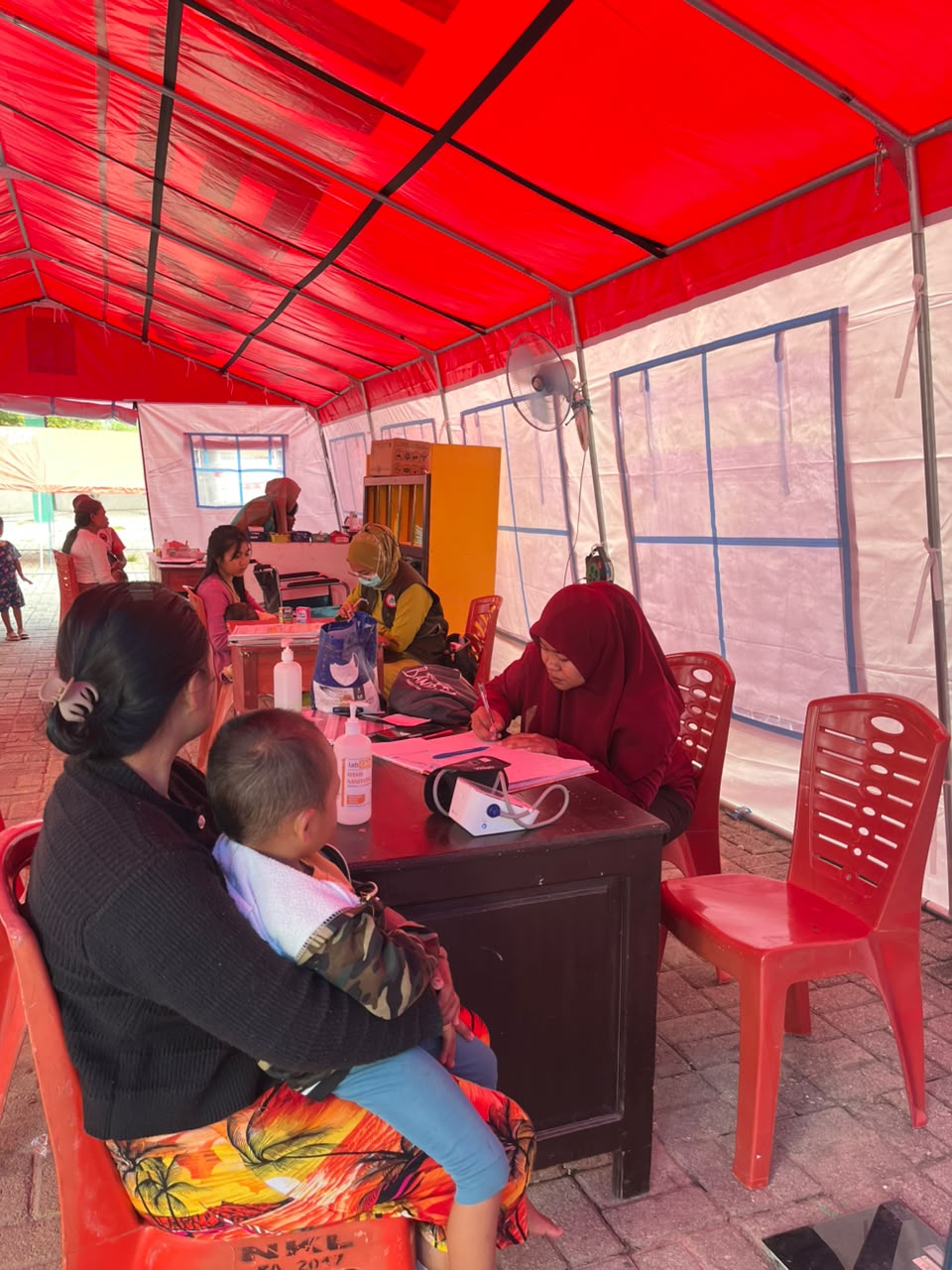
In addition to setting up emergency tents, the Nokilalaki Community Health Center also conducted visits to the hardest-hit villages. There are two severely affected villages within its service area. Residents have not yet been able to reach the health center because the roads are damaged.
“We visited the residents because they didn’t have any tents. There was a baby with a sprained ankle, so we went there. There were also elderly residents who needed help. We also had an ambulance on standby,” Muzna emphasized.
Muzna experienced an earthquake in 2023. At that time, it was smaller in scale than the current one. Even so, residents still refuse to stay in their homes because of the trauma from the 2018 earthquake.
“Back in 2023, we were just waiting for the health department to set up a command post. But after the training from IPAS, we took responsibility for communicating with staff and across sectors,” he recalled.
Through the CERAH project launched by the IPAS Indonesia Foundation in November 2024, Muzna and her community health center staff participated in training on first aid for accidents, the development ofa Disaster Risk Management Plan(DRMP), and a DRMP simulation. The goal of this project is to strengthen primary health care services, particularly in the area of reproductive health.
“So we’ve learned that community health centers need to be equipped with disaster management knowledge. We’re grateful for the knowledge provided by the IPAS Indonesia Foundation,” he said.
According to a press release from the BNPB, based on data from the Meteorology, Climatology, and Geophysics Agency (BMKG) as of Tuesday (June 23) at 12:00 a.m. local time, there have been 1,349 aftershocks since the main earthquake on June 16, 2026.
Preliminary data on the impact of the June 24, 2026, earthquake in Sigi Regency indicates that 3,600 households, or 9,609 people, were affected. All injured victims have received medical treatment and are now reported to have recovered and resumed their daily activities at home.