
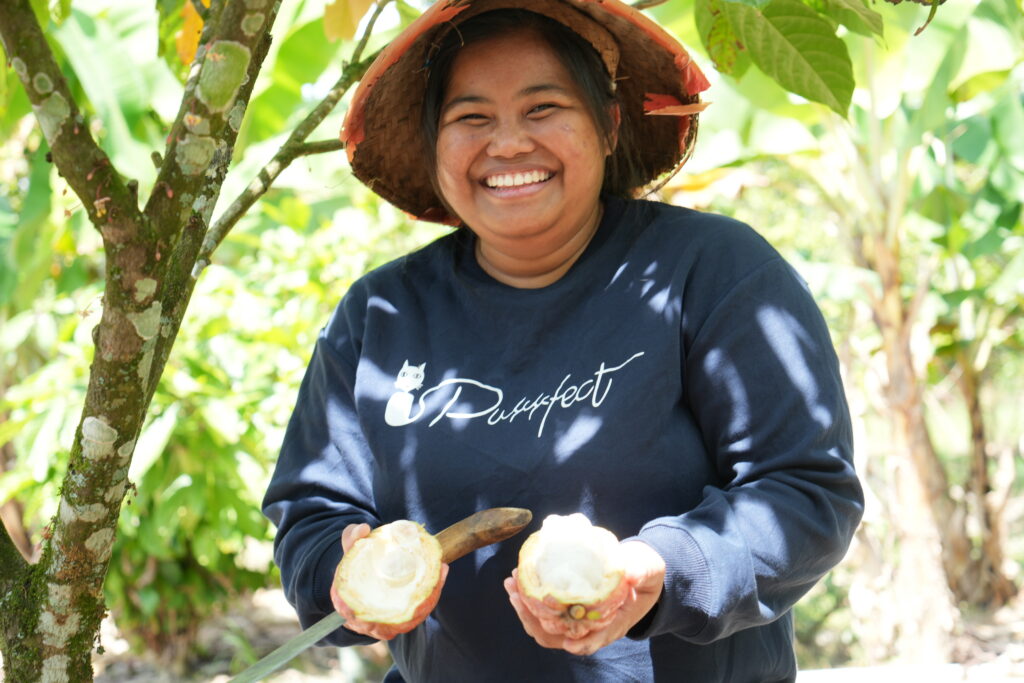
Although disasters impact women differently, Priska and other women in her village were rarely involved in disaster-related discussions. This situation began to change after IPAS Indonesia introduced the CERAH (Climate Emergency, Reproductive Rights and Health) project in November 2024. Priska and other women began to voice their needs, particularly those related to Sexual and Reproductive Health and Rights (SRHR) in emergency situations.
“We talked about everything we need during a disaster. For example, during floods, we need separate toilets for men and women, menstrual pads, and contraceptives,” she recalled.
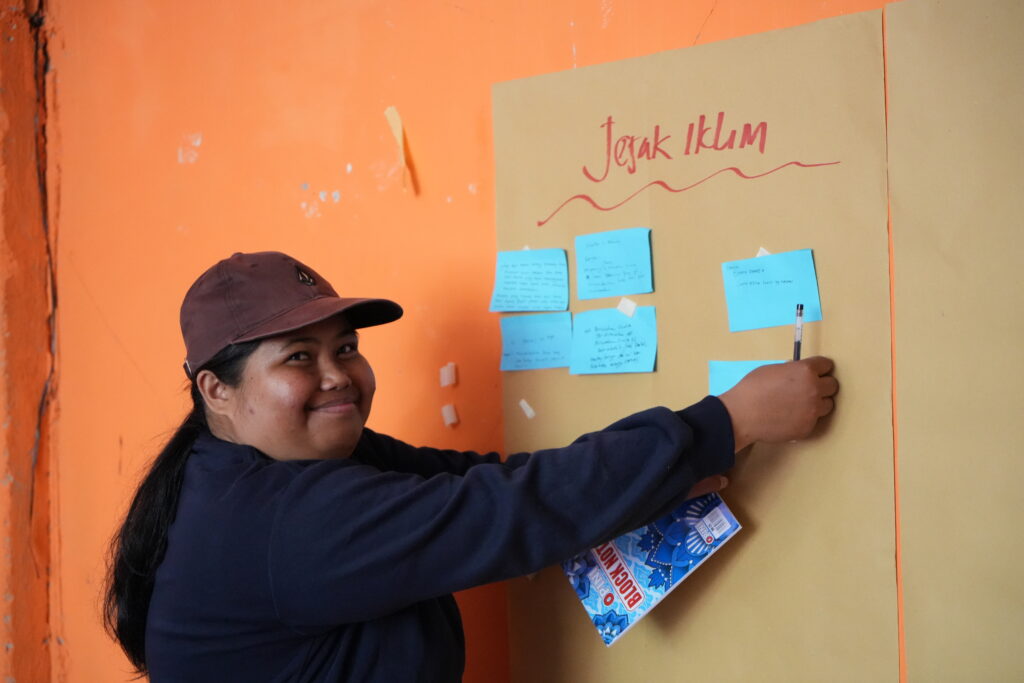
Priskastevani, along with a group of women in her village, was also involved in mapping women’s needs during disasters. Through these discussions, she realized that women’s needs are not uniform.
“Married women have different needs than single women like me. Age also plays a role; adolescents have different needs as well,” she said.
Once the list of needs was compiled, Priska and the women’s group presented their findings to village leaders. They hope these needs can be included in the planning for the use of village funds.
Empowering Women to Speak Out
The implementing partner of Yayasan IPAS Indonesia, Yayasan Merah Putih (YMP), supports this movement by increasing village community awareness regarding the links between gender, disasters, and SRHR.
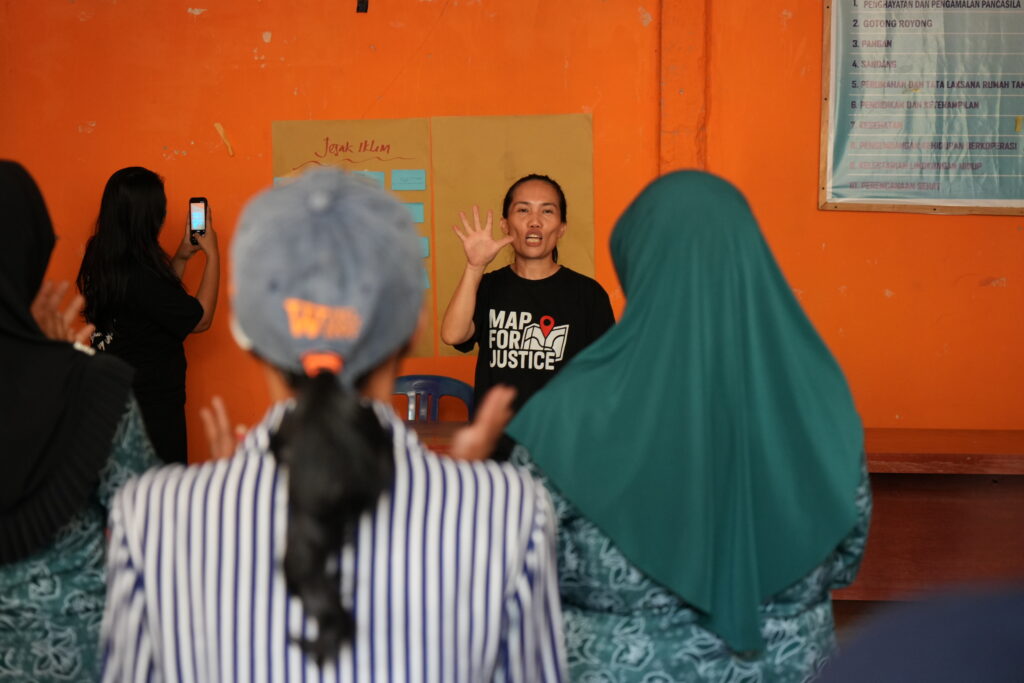
“We work together with local champions to identify and strengthen the voices of women, including adolescent girls. We also strive to bring the dialogue closer to their daily contexts and encourage women to have the courage to speak out,” said Ferra Rifni Nusa, YMP Project Manager.
One of the main challenges, she explained, is the knowledge gap.
“There are women who can speak confidently because they already understand these issues. However, there are also those who feel shy because their knowledge is still limited,” she added.
In the discussions, women not only discussed their SRHR needs but also considered the impact if health facilities were damaged by a disaster. Access to clean water became one of the top priorities.
“When the community maps its needs, we see a very large difference. Those living near health facilities certainly find it easier to access services. However, for women in remote and landslide-prone areas, the distance to health facilities is a serious challenge. When floods or landslides occur and road access is cut off, what happens if a mother is about to give birth?” Ferra explained.
Ensuring Women’s Voices Are Heard
YMP also involves village heads to build commitment at a higher level in fulfilling women’s needs during disaster emergency response. Local leaders were invited to a seminar to discuss the impact of disasters on women, with the hope of increasing their understanding and support.
“Out of 14 villages, only one village head has responded positively to women’s needs,” Ferra revealed.
From this experience, YMP learned that women’s courage to speak out alone is not enough. Decision-makers who are willing to listen and act are also required so that women’s needs are truly included in disaster planning. Therefore, the capacity of local women needs to be continuously strengthened so they are able to influence policy makers.
Priska’s journey reminds us that women are leaders in building community resilience and promoting gender equality. By amplifying their voices and ensuring their needs are heard, we can create disaster responses that are safer and more inclusive for everyone. This change does take time, but every step brings us closer to a community where the rights and safety of women are truly protected.