
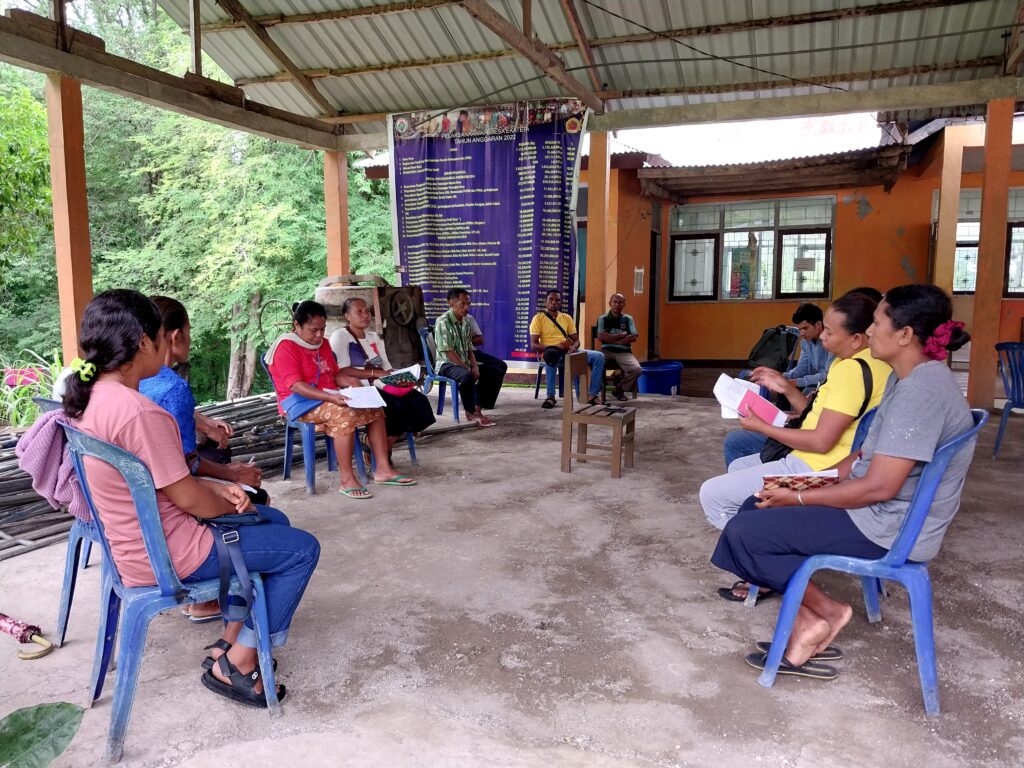
IPAS Indonesia Foundation’s partner, the Indonesian Planned Parenthood Association (PKBI) NTT, for the TAKENUSA program (Joint Commitment for Women’s Health in Nusa Tenggara), encourages women to participate in discussions and be active in decision-making processes related to reproductive health issues.
“Here, decisions regarding health are often exclusively made by men. Even if their decisions are wrong, men’s voices are still considered the most correct,” said Ardy Wio, Program Manager of PKBI NTT.
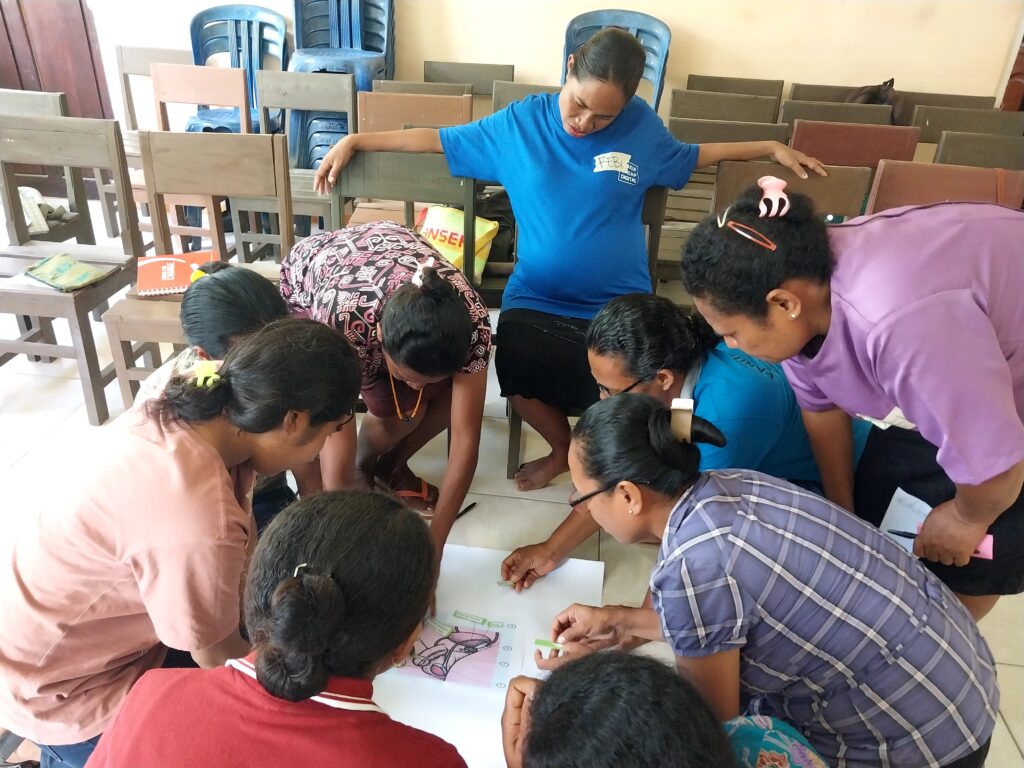
To involve women, PKBI NTT invites women, especially community health cadres, to initiate discussions on themes related to reproductive health, such as gender, family planning, childbirth, and Post-Abortion Care (PAC). These activities are usually conducted routinely every month in four TAKENUSA-assisted villages. In addition to cadres, these discussions also involve village officials, community leaders, and religious leaders.
These discussions serve as classrooms to strengthen cadres’ understanding of the importance of involving women in advocating for reproductive health issues. From the discussions held, Ardi realized that women cadres need to convey these issues through the Village Development Planning Deliberation (Musrenbang) at the village level.
“PKBI observes that village Musrenbangs still prioritize physical development. Among the four TAKENUSA-assisted villages, no reproductive health issues were brought to the Musrenbang,” Ardy emphasized.
Access to funding for free ultrasounds and referral transportation
Ardi mentioned that two active women cadres from Oeteta Village were actively involved in presenting reproductive health issues in the village Musrenbang. “They kept speaking up, continuously challenging dissenting opinions on reproductive health issues,” Ardi recalled.
Furthermore, Ardi added, some cadres used church forums to advocate for the importance of budget allocation for maternal health services. For context, Oeteta Village lacks an ambulance for referral transportation to health facilities.
“Thanks to their persistence and diligence in the Musrenbang, the Oeteta Village Government successfully allocated approximately Rp 5–7 million per year, or 3% of the total budget in the 2025 Village Budget (APBDes), which was budgeted under disaster and emergency management, for funding free ultrasounds and referral transportation,” he recounted.
Support for childbirth transportation costs
Ardi added that in Ekateta Village, transportation costs from the village to health facilities are a major challenge due to their high expense. For a single trip, pregnant women needing to give birth have to pay around Rp 500-700 thousand. This is the issue frequently raised by cadres from that village.
“During the village Musrenbang, cadres in Ekateta approached influential parties to ensure a reimbursement mechanism. So now, residents do not have to bear the high cost of the ‘oto’ (car) because the Village Government has budgeted Rp 200 thousand in support from the health sector budget,” he added.
For Ardi, one key to encouraging women’s participation in village forums is to enhance their communication skills. Effective communication strategies have the potential to foster good collaboration and achievements. Because success is not about how many villages change, but how strongly women’s voices are heard.
“Starting from discussing village fund regulations and identifying opportunities through communication with the village government, women’s voices can be heard and accepted. For me, that is the biggest impact—when women are not only involved but also trusted to be part of decision-making,” Ardy concluded.