
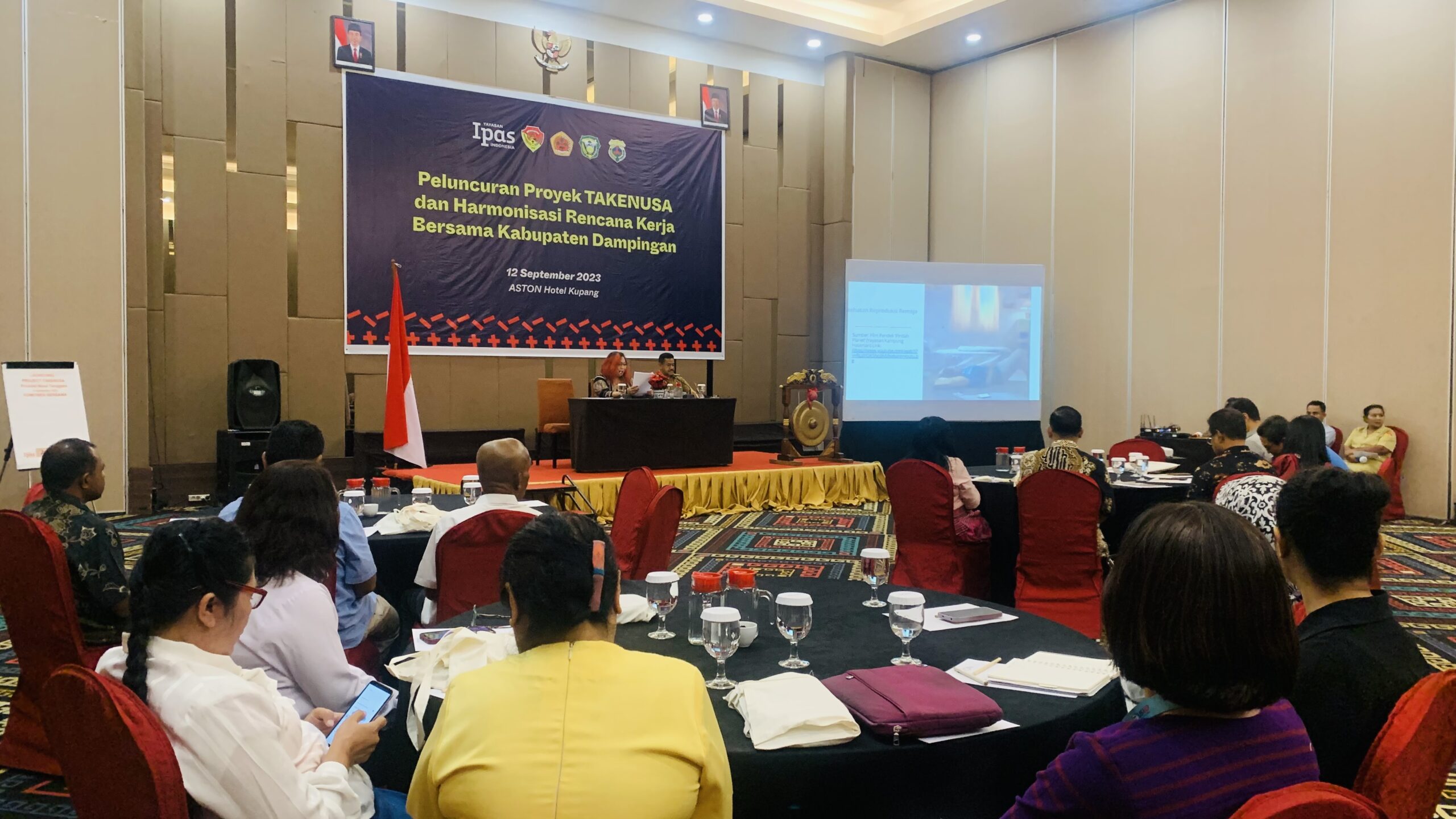
On September 13, 2023, the TAKENUSA Project (Joint Commitment for Women of East Nusa Tenggara) was launched in Kupang Regency, East Nusa Tenggara. This 4-year project, initiated in collaboration with the Initiative for Change in Access to Health Foundation (IPAS) Indonesia, aims to support the efforts of the East Nusa Tenggara (NTT) Provincial Government in reducing the Maternal Mortality Rate (MMR).
Overall, the TAKENUSA Project is implemented in 3 regions: Kupang Regency, South Central Timor Regency, and East Flores Regency. In collaboration with relevant agencies and primary and secondary healthcare facilities, TAKENUSA aims to strengthen the provision of Comprehensive Post-Abortion Care (PAC) services, increase access to rights-based Family Planning (FP) services, and provide information and access to reproductive health information and education tailored to the needs of women and adolescent girls. Simultaneously, TAKENUSA will collaborate with other Non-Governmental Organizations to strengthen community cadres. Ultimately, it is hoped that women and adolescent girls will gain information, education, and skills to utilize quality and reliable reproductive health services.
The Head of Kupang Regency BP4D, Juhardi David Selan, welcomed TAKENUSA, which will be implemented during the same period as the NTT Regional Development Plan (RPD) for 2024-2026. “The TAKENUSA Project contributes significantly to reducing maternal and infant mortality rates and stunting in Kupang Regency, making cross-sector collaboration among the government, religious leaders, traditional leaders, and others crucial for the success of this project,” he stated.
In her welcoming remarks, the Executive Director of IPAS Indonesia Foundation, Dr. Marcia Soumokil, MPH, emphasized that the reproductive health of women and adolescent girls is a shared concern. “It is crucial to provide comprehensive and complete information and education, tailored to the needs of women and adolescent girls,” she stated. Equally important is working collaboratively with immediate surroundings such as families, communities, community leaders, and religious leaders to create an environment that enables women to make the best decisions for their reproductive health.
The TAKENUSA Project will specifically contribute to ensuring “a reduction in morbidity and mortality rates among women due to preventable reproductive health issues. One way is by spacing pregnancies,” said Dr. Marcia. She also expressed appreciation to the Kupang Regency Government for accepting the TAKENUSA Project. The cross-sectoral working model to be employed by this project is expected to strengthen existing structures and mechanisms in Kupang Regency to address the challenge of reducing MMR, which can then contribute to the quality of a healthy and stunting-free younger generation.