
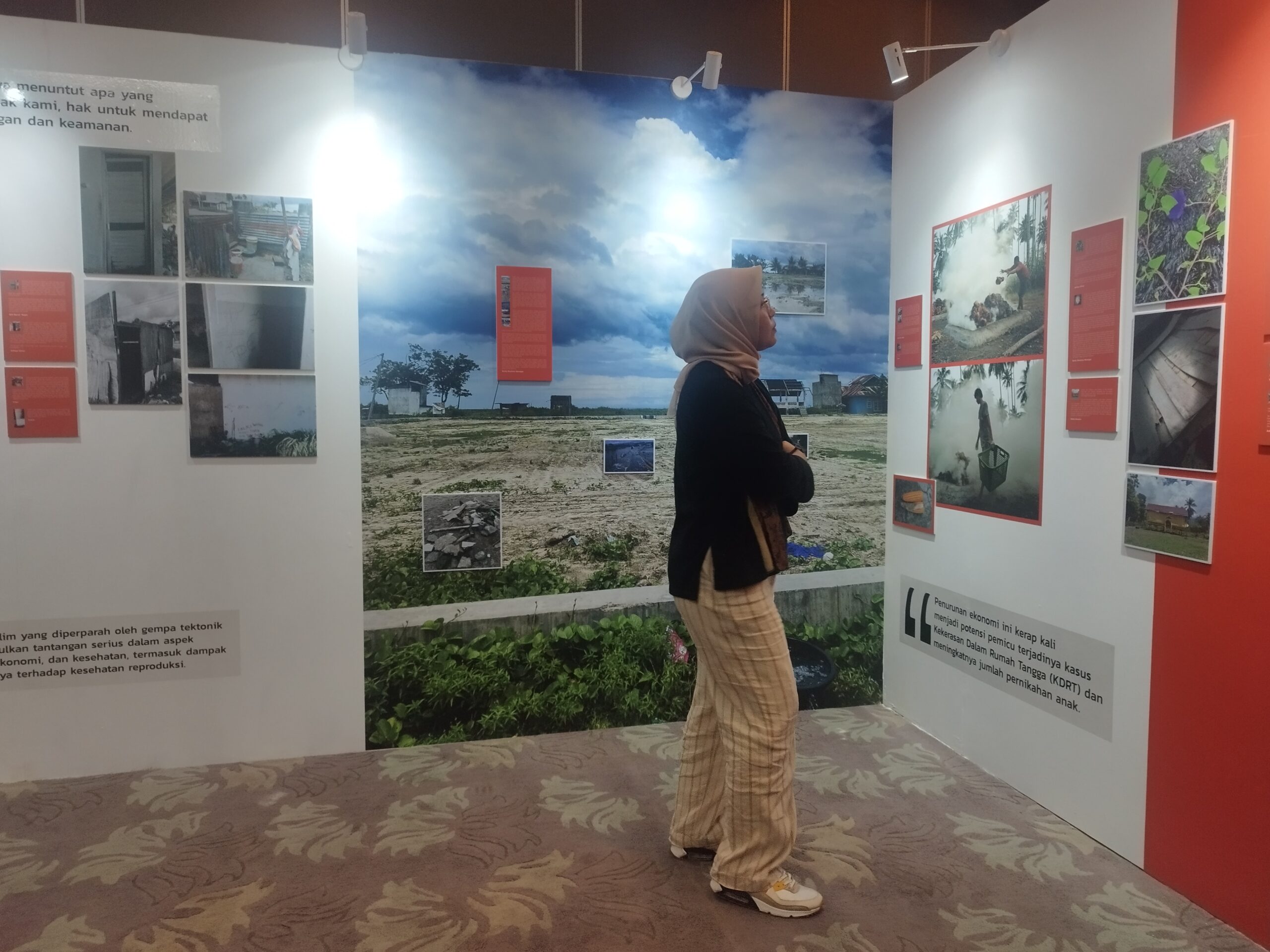
The climate crisis has been demonstrably exacerbating the reproductive health of women and adolescent girls in Indonesia. How can this situation be portrayed through photographic media? Yayasan IPAS Indonesia invited young people aged 19-24 from Sigi and Donggala, Central Sulawesi, to address this challenge in a Photovoice Training Workshop. This training was conducted from March 5-8, 2024, in Palu, Central Sulawesi.
Faradiva Aulia Azmi’s eyes welled up as she presented the results of her photos, which she took in her village, Kotapulu, Sigi, located 30 minutes from Palu City. She interviewed a woman who married at the age of 15 due to economic hardship caused by crop failure.
“Her land was sold because the drought made cultivation impossible. Out of pity for her family, feeling she was a burden, she decided to marry. Perhaps by marrying, her burden would lessen slightly,” Dinda recounted, sharing the story of the interviewee in the photo.
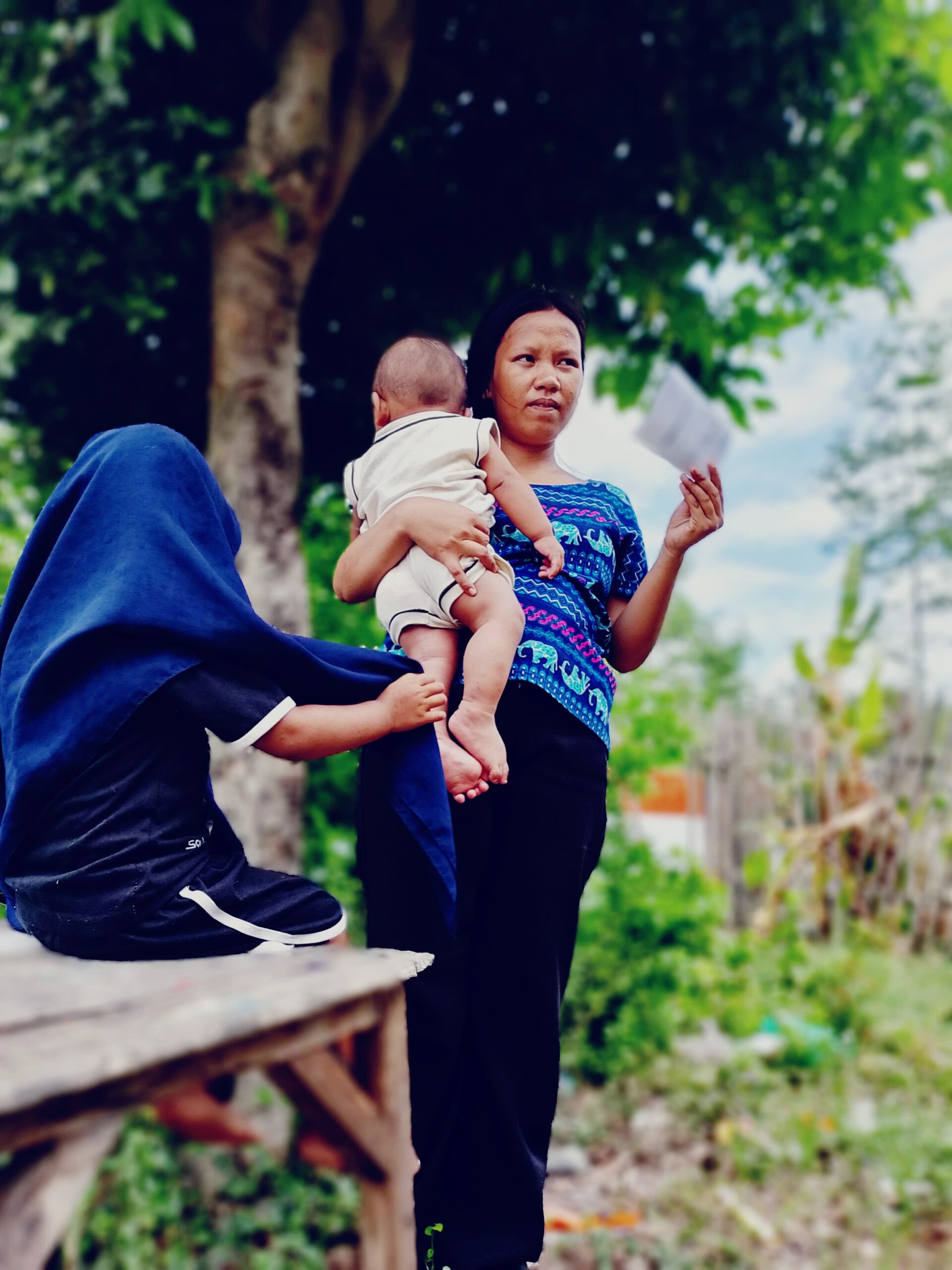
Siti married at the age of 15, specifically during her second year of junior high school. As a result of her marriage, Siti was forced to drop out of school. Her marriage occurred not by her own will, but out of compulsion. Siti’s parents arranged her marriage at a very young age to alleviate the family’s economic burden. They had sold the family land due to the impact of the climate crisis and transitioned from farmers to sellers of
binte biluhata (corn soup). Photo and narration by: Faradiva Aulia Izmi
A similar narrative was also shared by another participant from Donggala Regency, Dito. He interviewed a friend who was forced to marry as a child because their parents could not support them. Their parents’ income as farm laborers was insufficient due to extreme weather causing crop failure.
The practice of child marriage is almost common in these two regions. They believe that by marrying off their children, economic problems would be resolved as the family’s burden would decrease. However, most of these hopes are far from reality. The cycle of poverty actually worsens, leading women to bear a double burden: seeking economic necessities and managing the household.
Climate Crisis Worsens Access to Clean Water
The photos and stories presented by Faradiva and Dito demonstrate how the climate crisis makes Reproductive Justice increasingly distant from ideal. In several coastal villages in Donggala, approximately 2-3 hours from Palu, women’s safety is threatened when accessing clean water. They are often harassed while bathing in rivers or fetching water from wells.
Another Photovoice participant, Gilang, met a mother who daily struggles to access water suitable for household use. To use a public toilet, she must first go to the river. Furthermore, access to water has become increasingly difficult due to tidal floods that frequently inundate the village.
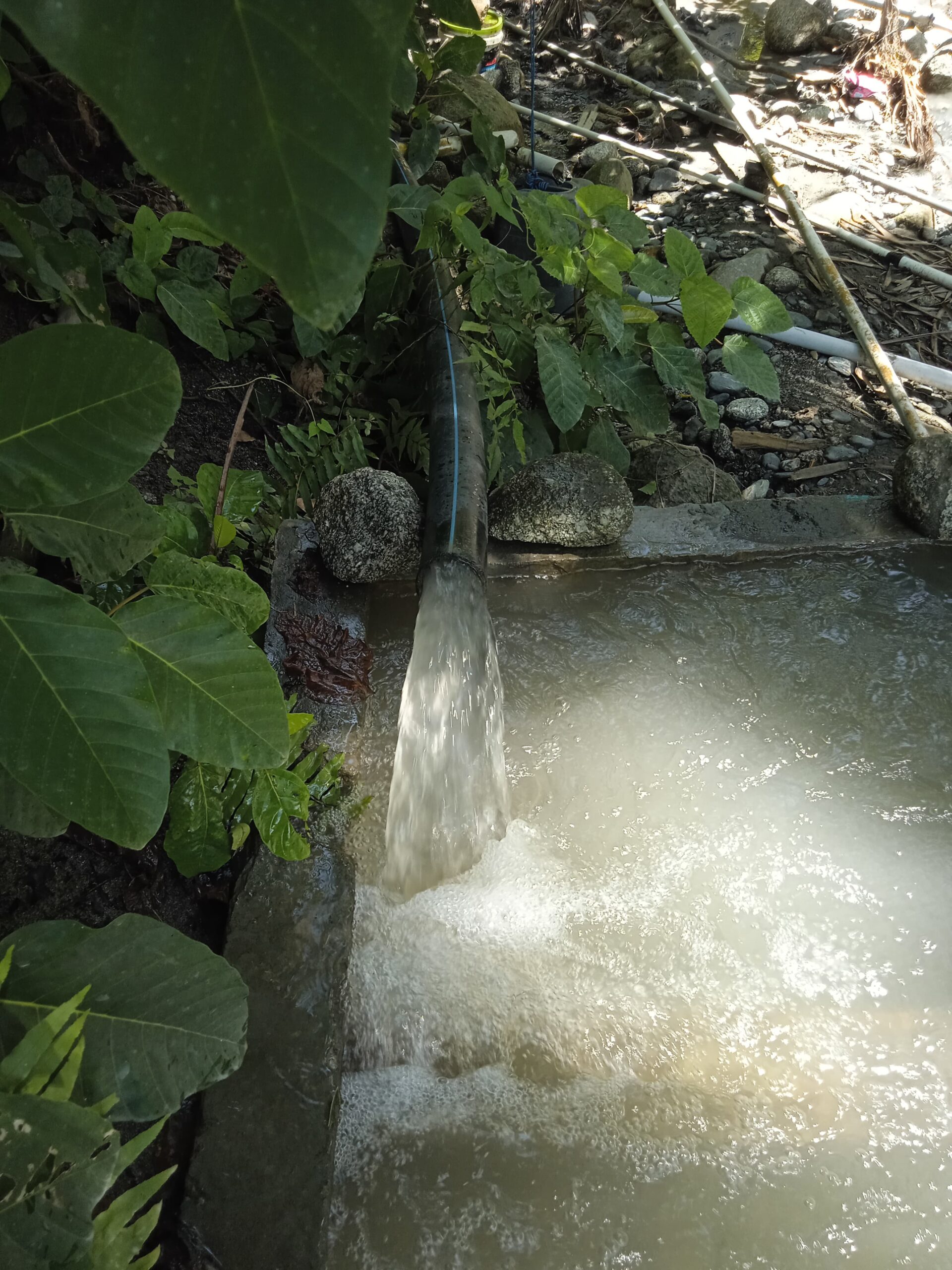
The water condition at home is unfit for consumption because its color is murky and polluted. I was surprised to see the condition of the clean water reservoir mentioned by Mrs. Apriani, which was very dirty and muddy. There is also no toilet in her house, so for bathing, washing, and defecating (MCK) needs, Mrs. Apriani’s family must use a public toilet located not far from their home. (Photo and narration by: Alif Nurul Yaqin)
For women in the village, unsuitable water poses a problem for their reproductive health. Some women complain of experiencing vaginal discharge due to using that water daily.
Double Burden
The water crisis, exacerbated by the climate crisis, causes women to bear a double burden. In addition to being responsible for household matters, such as childcare and cooking, they are also responsible for providing water for their families.
In Donggala Regency, women have to go to a neighboring village to meet their family’s water needs. The water in their village is unsuitable because it is mixed with seawater due to tidal floods.
According to local government regulations, no one should be living in the red zone in Tompe Village, Sirenja District, Donggala, due to earthquakes and tidal floods. However, many residents still reside in the red zone because it is considered closer to their workplace as fishermen. Although some residents have moved to permanent housing (huntap), others still remain in temporary housing (huntar).
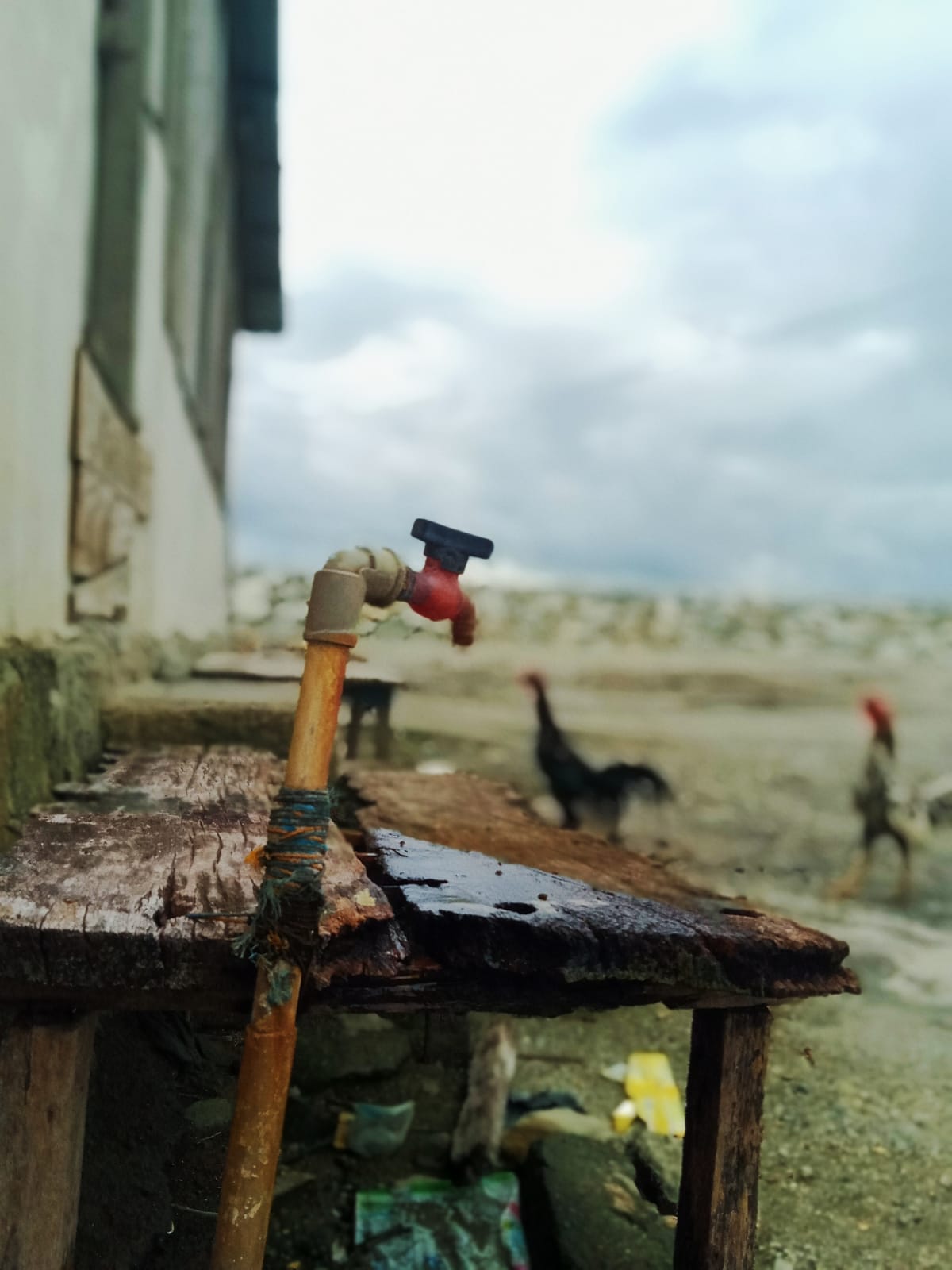
That tap should be a source of life for every human. However, in reality, many ignore it. Many residents living in the red zone face problems with clean water availability. The water is rusty. Many women in Tompe Village experience vaginal discharge. (Photo and narration by: Maydi Sogina)
These findings are new from a visual perspective and from the viewpoint of young people. The IPAS Foundation believes the impacts of this climate crisis are far more extensive. We remain committed, from grassroots efforts to collaborating with local and national governments, to strengthen reproductive health systems so that communities are more resilient.